Contact Us
If you have a commercial, industrial, infrastructure or heritage structural repair enquiry, contact us now. We will respond within one working day. Please note we do not provide services for domestic properties.

If you have a commercial, industrial, infrastructure or heritage structural repair enquiry, contact us now. We will respond within one working day. Please note we do not provide services for domestic properties.
Business enquiries:
When managing complex civil infrastructure projects, identifying a structural defect is only the first step. The critical decision for asset managers and facility directors lies in specifying the correct engineering intervention.
Often, the terms “rehabilitation” and “strengthening” are used interchangeably by general contractors. However, in the realm of specialist structural engineering, these represent two entirely distinct methodologies with vastly different objectives, techniques and outcomes.
Misunderstanding these terms can lead to specifying the wrong repair, resulting in wasted capital expenditure, unaddressed safety risks or catastrophic asset failure.
In this definitive guide, we explore the exact differences between concrete rehabilitation and structural strengthening, detailing when each approach is required to secure your infrastructure projects.
Concrete rehabilitation is the engineering process of restoring an existing structure to its original design capacity and intended lifespan.
When infrastructure projects are exposed to harsh environments – such as coastal seawalls battered by chlorides or multi-storey car parks subjected to relentless freeze-thaw cycles – the concrete matrix degrades. Moisture and oxygen penetrate the protective cover, initiating rebar oxidation. As the internal steel rusts, it expands with immense kinetic force, causing the concrete to crack, delaminate and spall.
Rehabilitation does not aim to make the structure stronger than it was on the day it was built. Instead, the objective is to arrest this active degradation, replace lost material and reinstate the asset’s original structural integrity.
Structural strengthening is the engineering process of upgrading an asset to increase its load-bearing capacity beyond its original design limits.
While rehabilitation fixes a defect to return a building to its baseline, structural strengthening fundamentally alters the structural dynamics of the asset. This is a critical intervention when the original design is no longer sufficient to safely handle the demands being placed upon it.
Strengthening is required in several specific scenarios: when a commercial building undergoes a change of use (such as converting office space into a heavy data centre), when design codes change (requiring advanced seismic upgrades) or when infrastructure projects must adapt to heavier modern dynamic loads (such as older bridges needing to support heavier commercial freight).
To clarify the operational differences for asset managers, the table below highlights the distinct pathways of these two engineering disciplines.
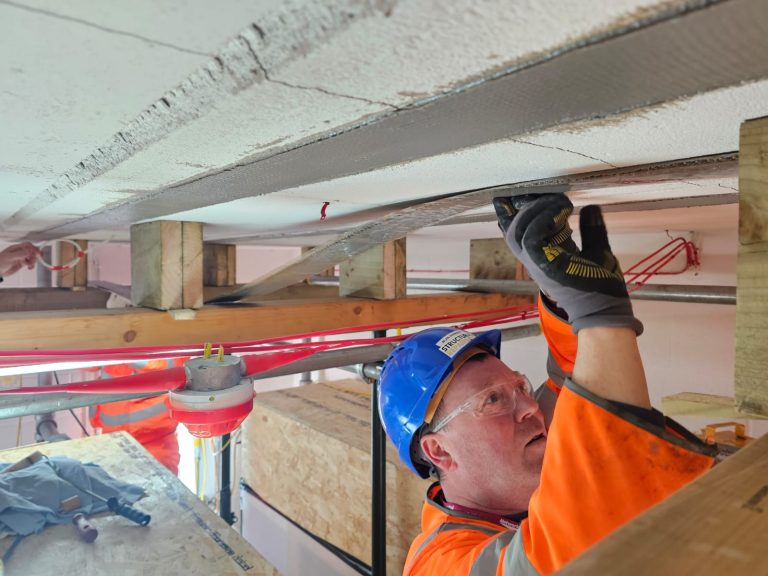
In the world of infrastructure, safety and longevity are paramount—especially when it comes to critical assets like rail networks. At Structural Repairs, we recently completed a complex yet highly effective…

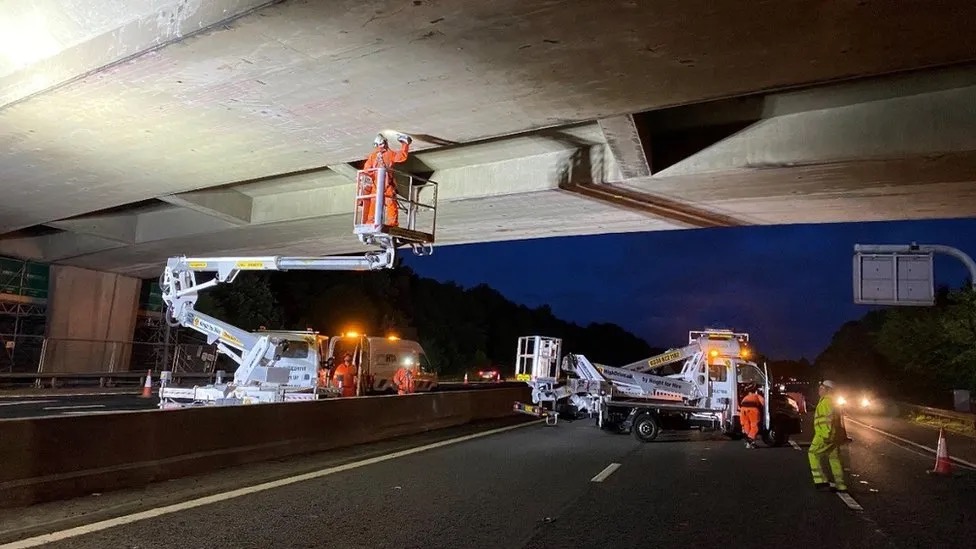
A civil engineering case study detailing the deployment of autonomous robotic crawlers for Ground Penetrating Radar (GPR) and visual bearing inspections on the M5 Avonmouth Bridge. Highlights the acquisition of empirical data to inform preventative concrete repair and bearing replacement for National Highways, while eliminating rope access and traffic disruption.
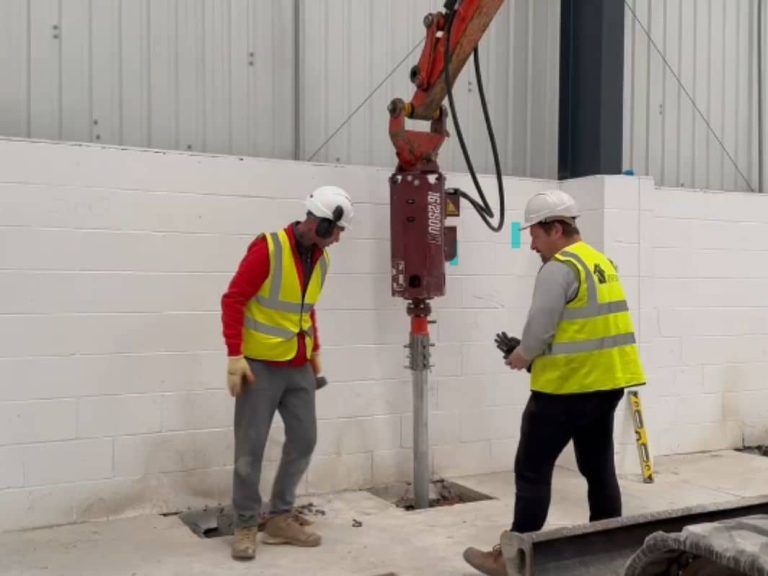
Screw Piles technique for Two New Builds Structural Repairs revolutionises foundation solutions with both screw piles and helical piles. This innovative approach triumphs in challenging sand and peat terrain, as…
Identifying the exact point at which an asset crosses from needing standard rehabilitation to requiring critical structural strengthening demands specialist engineering oversight.
At Structural Repairs, we manage the entire remediation lifecycle for complex infrastructure projects. As an integrated specialist engineering contractor, we do not rely on guesswork.
If your asset is exhibiting signs of severe structural distress or you are planning a significant change of use, we deploy advanced non-destructive testing (NDT), 3D laser scanning and Ground Penetrating Radar (GPR) to capture empirical data. Based on this forensic analysis, our in-house engineering team designs and executes the precise composite strengthening systems – manufactured directly at our UK facility – required to safely upgrade your asset.
Do not risk the safety of your infrastructure by treating a structural deficit as a cosmetic maintenance issue.