Contact Us
If you have a commercial, industrial, infrastructure or heritage structural repair enquiry, contact us now. We will respond within one working day. Please note we do not provide services for domestic properties.

If you have a commercial, industrial, infrastructure or heritage structural repair enquiry, contact us now. We will respond within one working day. Please note we do not provide services for domestic properties.
Business enquiries:
When a structural element fails – whether due to impact damage, sudden subsidence, fire, or the discovery of a critical design flaw – the timeline to catastrophic collapse is entirely unpredictable. You are immediately thrust into a high-liability crisis in which the safety of the public, your site operatives, and the asset’s survival are critically threatened. In a structural emergency, rapid mobilisation must be matched with absolute engineering certainty.
Deploying a standard scaffolding contractor to prop a failing commercial or heritage structure is a terminal error. Scaffolding is designed to carry the weight of workers and light materials; it is not designed to support hundreds of tonnes of dead and live structural loads.
When untrained personnel attempt to shore a compromised building without calculating the exact load paths, they frequently trigger the exact collapse they are trying to prevent. Point-loading a weakened slab with a heavy-duty prop or failing to cross-brace a façade retention system against wind shear transforms a localised structural failure into a total asset loss. You do not just need steel in the air; you need empirical Temporary Works Design (TWD).
Structural Repairs was forged in emergency response. We bridge the gap between rapid deployment and forensic structural engineering. When mobilized to a dangerous structure, we do not guess where the weight is shifting. Our in-house engineers rapidly calculate the compromised load paths and design bespoke temporary works to safely transfer those loads down to solid ground.
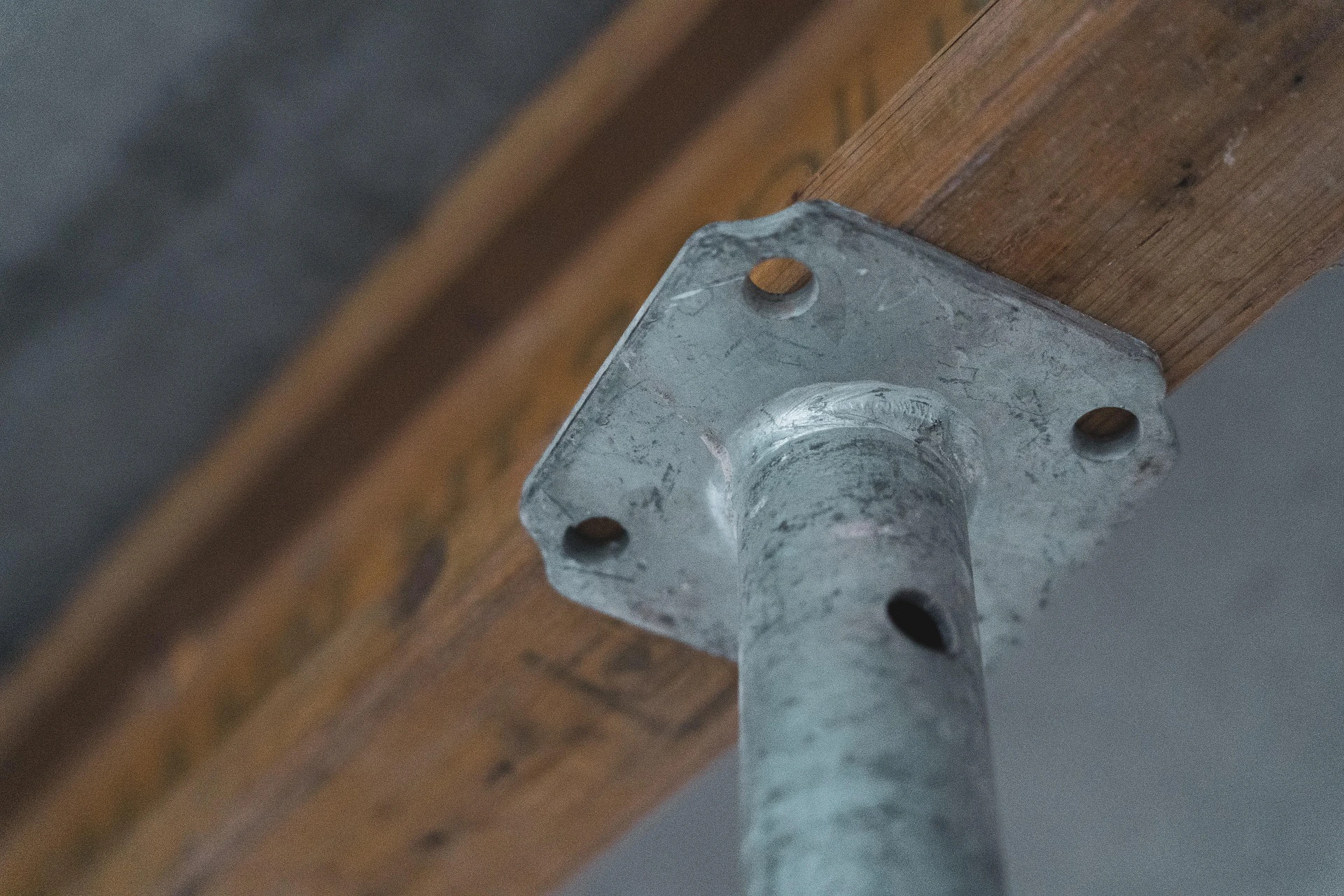
We deploy specialist, high-capacity shoring systems—from hydraulic lifting rams to heavy-duty RMD Kwikform or proprietary steelwork—to immediately arrest movement and lock the structure in place.
Standard scaffolding is an access solution designed primarily to support personnel and light tools safely at height. Structural propping (shoring) involves high-capacity steel or hydraulic systems designed to hold up the building itself. The load requirements for propping are exponentially higher and require entirely different engineering calculations.
Yes. Under CDM (Construction, Design and Management) regulations, any temporary structure that provides structural support must be formally designed and signed off by a competent engineer. Relying on “rule of thumb” shoring in an emergency exposes the asset owner and contractor to immense legal and physical liability.
We operate a rapid-response mobilisation protocol. However, speed never supersedes engineering. While our physical shoring teams and heavy-duty equipment deploy immediately to the site, our temporary works engineers simultaneously calculate the safe load paths. We secure the site perimeter instantly and install the engineered shoring the moment the calculations are verified.
Once the structure is statically locked and safe to access, our diagnostic teams move in. We conduct a full structural pathology survey – deploying 3D laser scanning, NDT or concrete coring – to determine why the failure occurred. We then engineer and execute the permanent repair, sequentially removing the temporary propping as the new structural elements take the load.