Contact Us
If you have a commercial, industrial, infrastructure or heritage structural repair enquiry, contact us now. We will respond within one working day. Please note we do not provide services for domestic properties.

If you have a commercial, industrial, infrastructure or heritage structural repair enquiry, contact us now. We will respond within one working day. Please note we do not provide services for domestic properties.
Business enquiries:
Earthquakes subject critical infrastructure to devastating lateral and vertical forces. Standard masonry and ageing concrete are inherently rigid, meaning they frequently fail catastrophically under sudden tectonic stress. Structural Repairs provides advanced engineering methodologies to fortify vulnerable buildings against seismic events and definitively restore assets compromised by ground movement.
Guided by a “solution-first” engineering ethos, we bridge the gap between forensic diagnostics and permanent structural rehabilitation.
Existing structures often lack the tensile strength and ductility required to survive violent seismic shocks. We deploy advanced Carbon Fibre Reinforced Polymer (CFRP) systems to fundamentally upgrade the structural resilience of your asset before a tectonic event occurs.
Applied directly to load-bearing columns, beams and critical structural joints, this highly engineered, lightweight matrix exponentially increases the load capacity and flexibility of the concrete. Crucially, by bonding high-strength carbon fibre grids to the underside of floor slabs and structural soffits, we dramatically increase tensile resistance. This targeted methodology prevents the catastrophic mid-span collapse of suspended floors during violent ground tremors, allowing the entire building framework to flex safely under extreme lateral disruption.
The data from recent post-earthquake reconnaissance reports – particularly following the 2023 Anatolian fault rupture – reveals a critical pattern: buildings don’t just fail; they fail in highly specific, predictable and preventable ways.
The most common catalysts for catastrophic collapse – such as inadequate column density, soft-storey formations, weak beam-column joints and deep concrete segregation – are the exact vulnerabilities Structural Repairs is engineered to resolve. Where academic reports document the mechanics of tectonic failure, we deploy the precise methodologies required to neutralise them.
By transitioning from forensic problem identification to engineered intervention, we bridge the gap between theoretical risk and permanent structural certainty. Our core capabilities – from applying pre-emptive CFRP matrices to upgrade load capacity, to deploying high-pressure structural resin injection to resolve hidden voiding – are direct, targeted answers to the most devastating mechanisms of seismic disruption. We don’t just repair the symptoms of structural stress; we fundamentally harden the asset against the realities of dynamic loading.
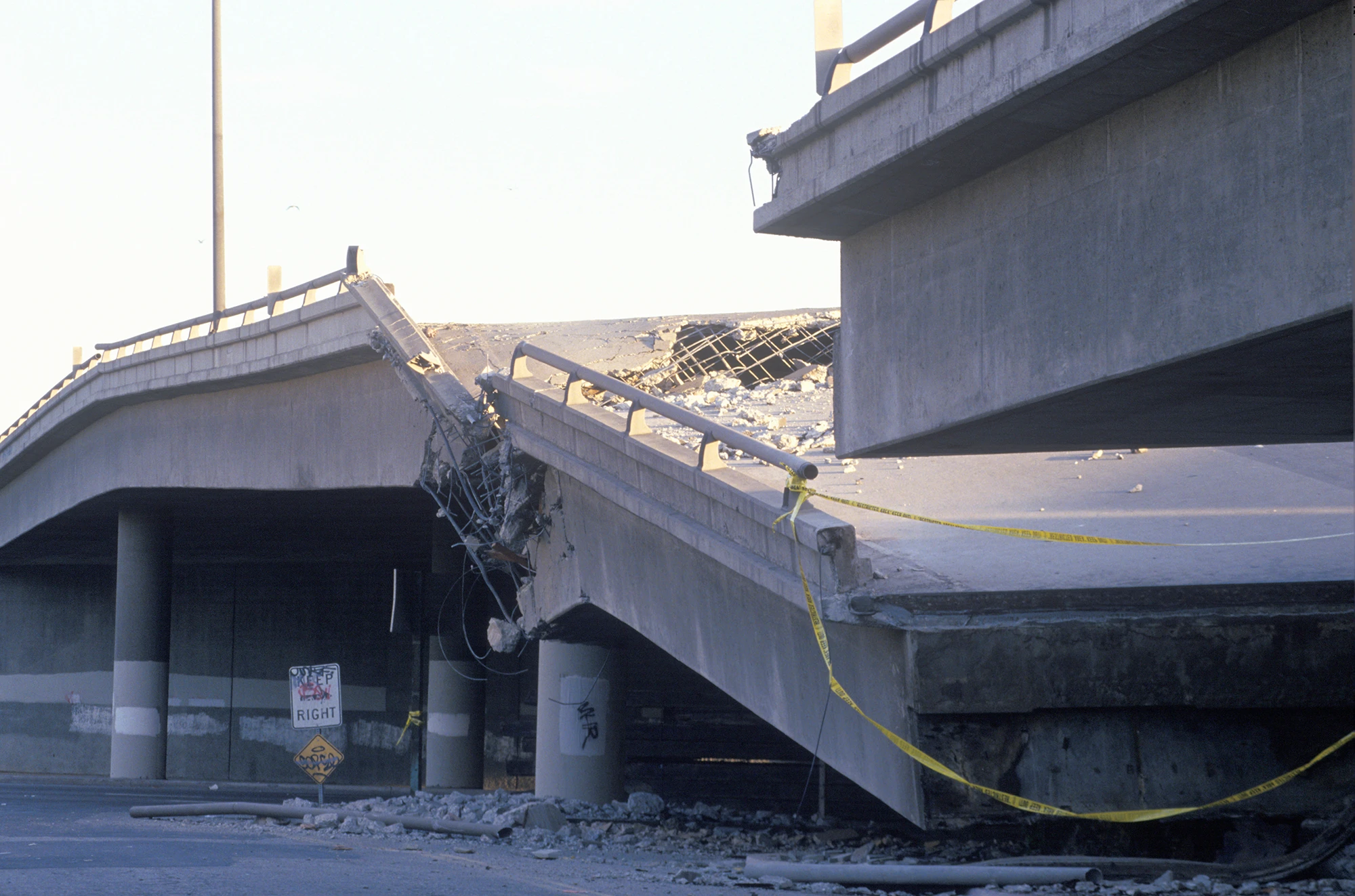
Seismic strengthening – engineering to stabilise damaged structures before catastrophic failures.
Where a seismic event has caused active structural failure, rapid and decisive engineering intervention is mandatory. We restore the fundamental load-bearing capacity of damaged infrastructure without resorting to mass demolition.
Our engineers deploy high-pressure epoxy resin injection to weld deeply fractured concrete back together on a molecular level. When combined with targeted carbon fibre patching, this highly specified methodology not only repairs the immediate tectonic damage but actively upgrades the fundamental strength of the structure against future seismic tremors in strict accordance with BS EN 1504 concrete repair standards.
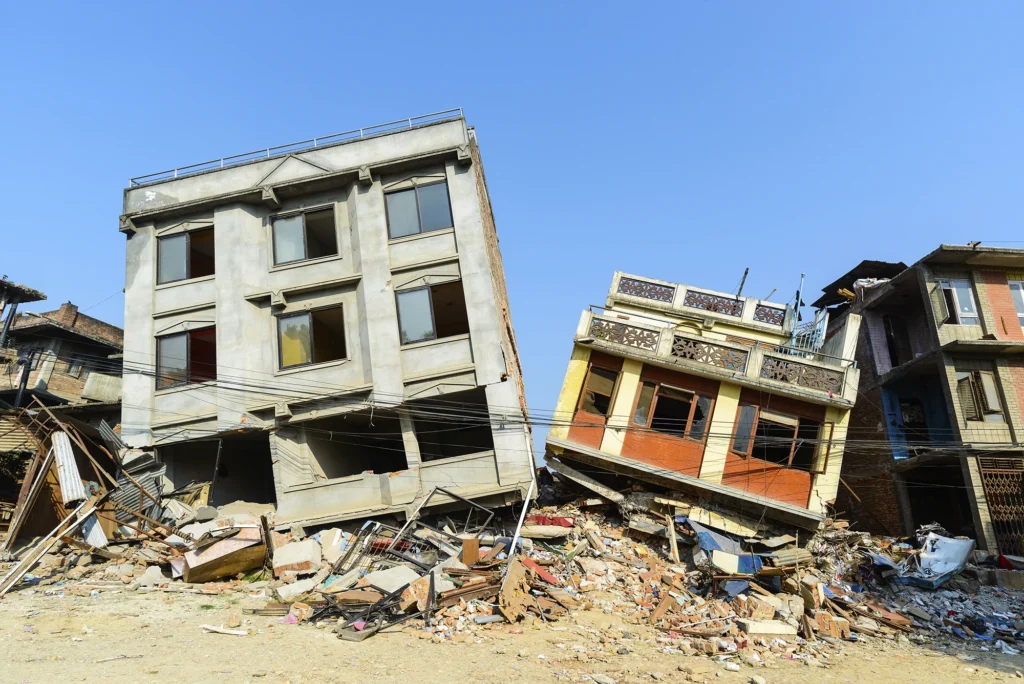
Seismic strengthening & earthquake remediation – lessons learned from the Anatolian earthquake.
Seismic strengthening (or retrofitting) is the engineering process of upgrading an existing building to increase its resilience against earthquake activity. The goal is to improve the structure’s ductility and shear capacity, allowing it to flex and absorb kinetic energy without suffering sudden, brittle failure.
Carbon Fibre Reinforced Polymer (CFRP) provides immense tensile strength at a fraction of the weight of steel. By wrapping concrete columns in CFRP, engineers create high-strength confinement (hoop strength). If the concrete cracks during a tremor, the carbon jacket holds the structural core together, preventing explosive spalling and total collapse.
A soft-storey formation occurs when a building’s ground floor is significantly less rigid than the floors above it – commonly seen in open-plan commercial lobbies or car parks lacking partition walls. During an earthquake, the extreme lateral forces concentrate at this weak point, frequently causing the ground floor columns to buckle and the entire building to collapse downwards.
Surface cracking is only a symptom. Structural Repairs deploys advanced Non-Destructive Testing (NDT), including Ground Penetrating Radar (GPR) and ultrasonic echo testing, to map the internal matrix of the concrete. This allows our engineers to locate invisible shear fractures, delamination and rebar slippage deep within the structure.
Whether you are retrofitting a vulnerable estate or require immediate engineering intervention following ground movement, our diagnostic and remediation teams operate precisely where standard solutions fail.
Contact our engineering desk today to arrange a definitive seismic consultation.