Contact Us
If you have a commercial, industrial, infrastructure or heritage structural repair enquiry, contact us now. We will respond within one working day. Please note we do not provide services for domestic properties.

If you have a commercial, industrial, infrastructure or heritage structural repair enquiry, contact us now. We will respond within one working day. Please note we do not provide services for domestic properties.
Business enquiries:
The most expensive structural repairs are almost always those that were ignored for too long. For asset managers and commercial property owners, waiting for a visible failure—such as falling concrete, a flooded basement or a sagging roof—is a strategy that guarantees maximum operational disruption and spiralling costs. Preventative structural maintenance is the engineered process of identifying and arresting minor defects before they evolve into major structural liabilities.
When structural maintenance is deferred, the rate of degradation does not stay linear; it accelerates. A minor hairline crack in a car park deck allows chloride-laden water to reach the reinforcement. Within a few seasons, that single crack leads to widespread concrete spalling, potentially requiring a total deck replacement.
By the time a structural issue becomes obvious to an untrained eye, the cost of reinstatement has often increased tenfold. Proactive maintenance is not a cost. It is a strategic investment that extends the design life of the structure, ensures life-safety compliance and preserves the capital value of the asset.
Structural Repairs provides data-driven maintenance solutions designed to keep infrastructure and commercial buildings in peak condition. We do not just perform “checks.” We apply structural pathology and engineering expertise to create a lifecycle management plan for your property.
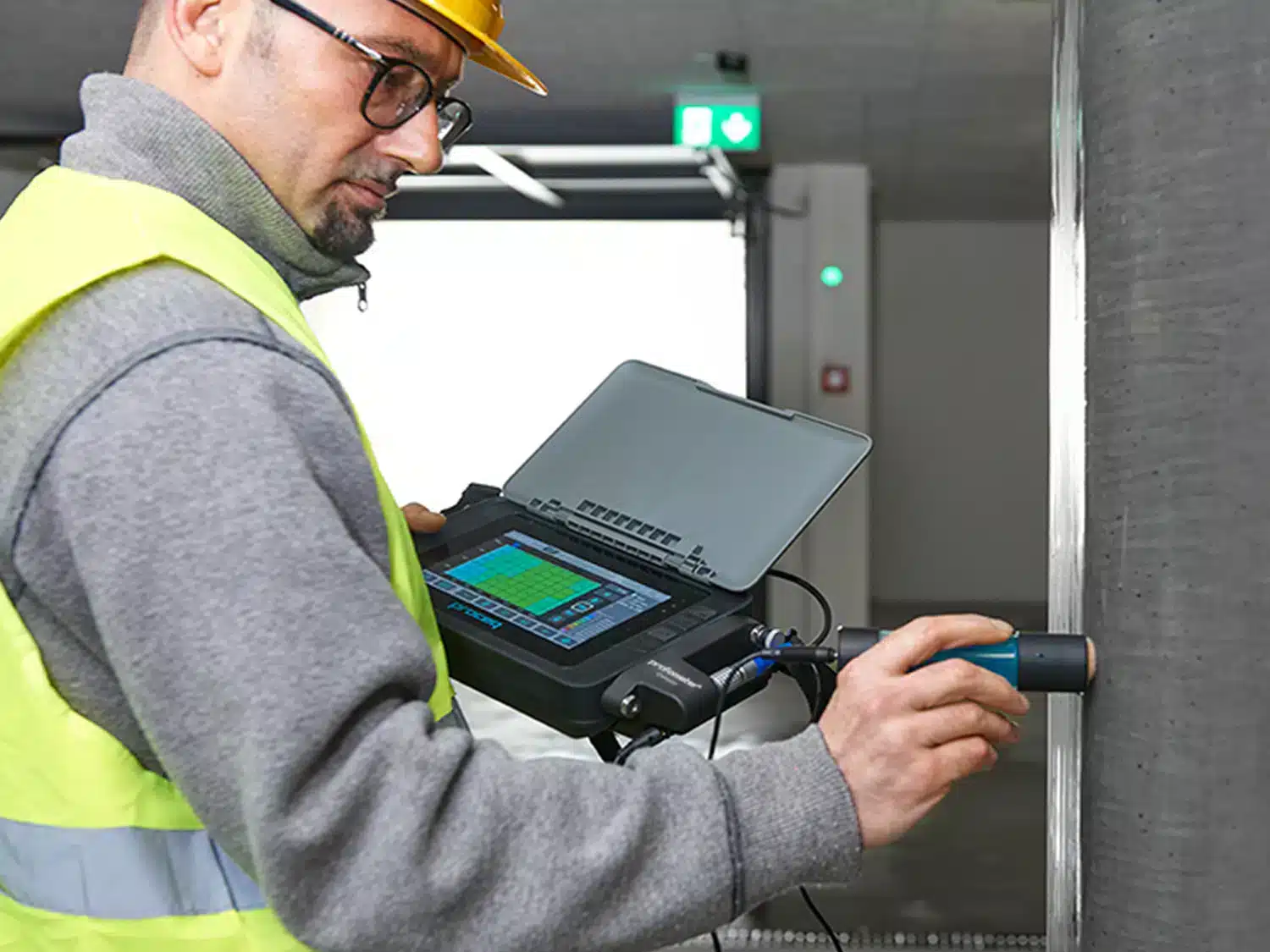
Structural decay is often invisible in its early stages. By the time you see rust staining or concrete cracking, the internal steel has already lost significant section. Preventative maintenance identifies these hidden threats through scientific testing. This allows for “surgical” repairs that are significantly cheaper and less disruptive than the “major surgery” required after a failure.
The frequency depends on the asset type and its environment. A coastal bridge or a high-traffic multi-storey car park should ideally undergo a structural audit every two years. For standard commercial offices, a five-year cycle is generally sufficient, provided that regular fabric maintenance is performed.
General maintenance covers cosmetics and utilities, such as painting, cleaning and lighting. Structural maintenance focuses on the “skeleton” of the building. We look at the load-bearing elements, the integrity of the concrete and the stability of the foundations. Our goal is to ensure the building remains safe and capable of carrying its design loads.
Absolutely. Regularly documented structural inspections and maintenance programmes provide a robust audit trail for insurers and health and safety authorities. It proves that you are meeting your “duty of care” as a building owner, which can be critical in reducing insurance premiums and protecting against liability claims.