Contact Us
If you have a commercial, industrial, infrastructure or heritage structural repair enquiry, contact us now. We will respond within one working day. Please note we do not provide services for domestic properties.

If you have a commercial, industrial, infrastructure or heritage structural repair enquiry, contact us now. We will respond within one working day. Please note we do not provide services for domestic properties.
Business enquiries:
Coastal seawalls and tidal defences operate in the most hostile environments on earth. They are subjected to relentless hydrostatic pressure, severe wave impact and continuous chemical attack from saltwater chlorides. When these structures begin to show signs of concrete spalling, deep structural cracking or foundation scour, the window for preventative intervention is rapidly closing.
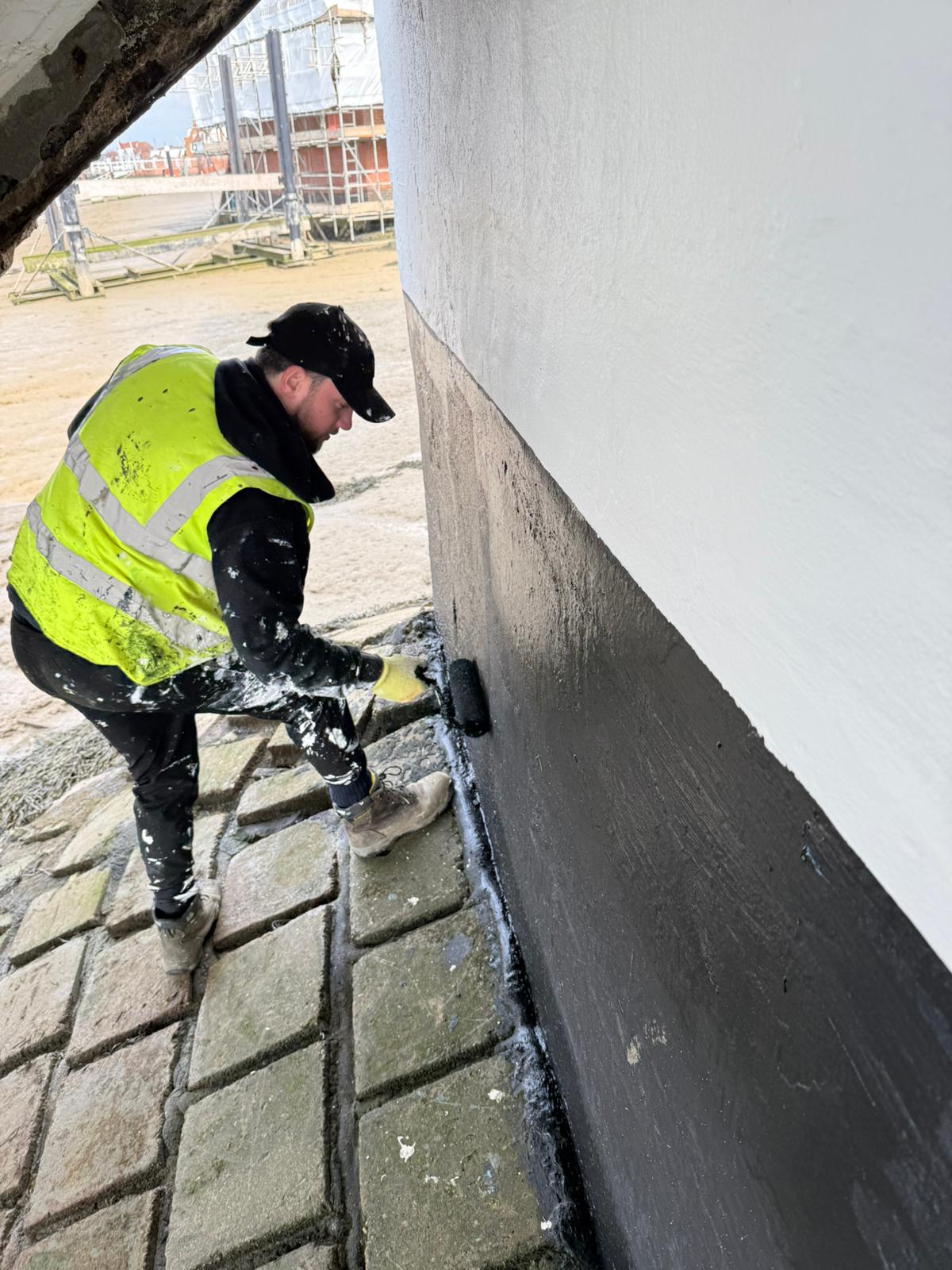
Repairing marine and coastal infrastructure is not standard construction – it is a battle against time and the elements. A traditional contractor attempting a concrete repair in a tidal splash zone will inevitably fail. Standard cementitious mortars wash away before they can cure, and conventional epoxies will not bond to saturated substrates.
Furthermore, the logistical constraints of marine engineering paralyse standard operations. Working within strict tidal windows, battling zero-visibility blackwater and accessing the tidal toe of a seawall requires a level of agility and specialist capability that standard contractors simply do not possess. If the chosen material fails to cure, or the team cannot execute the repair within the limited timeframe, the asset remains exposed to accelerated degradation, leading to structural condemnation or catastrophic collapse.
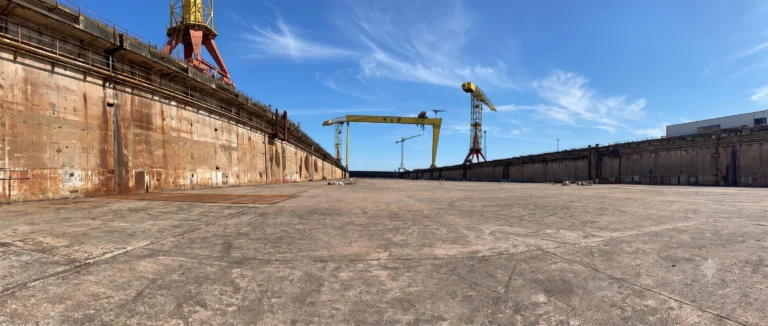
A civil engineering case study detailing the structural concrete rehabilitation of the historic Harland & Wolff dry docks in Belfast. Highlights the remediation of severe chloride-induced rebar corrosion and massive concrete spalling using BS EN 1504 compliant structural mortars and cathodic protection.
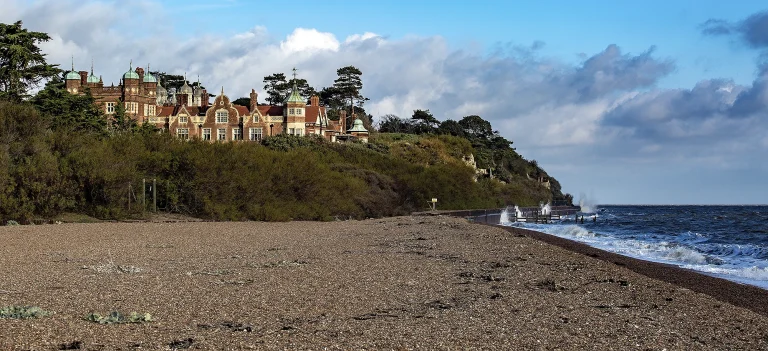
Structural Repairs Secures Seawall Restoration Project at Historic Bawdsey Manor Structural Repairs (SRS) is proud to announce that we have been appointed as the principal contractor to deliver essential seawall restoration…
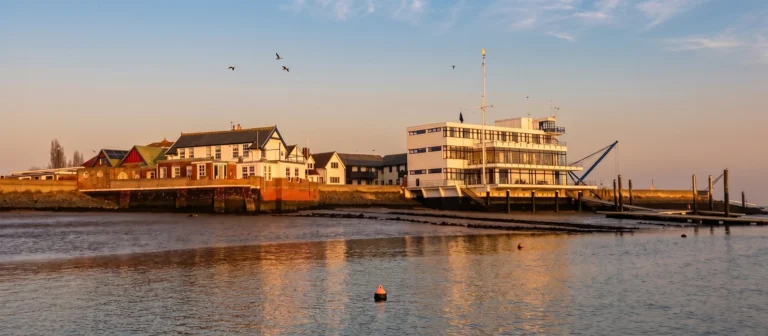
A Much-Loved Treasure in Peril The Royal Corinthian Yacht Club is an internationally renowned Grade II* listed coastal landmark designed by pioneering modernist architect Joseph Emberton in 1931. As a…
When civil engineers and coastal authorities approach us regarding failing marine assets, they need empirical data and guaranteed service life extension. Here is how our engineering-led approach addresses the most common coastal defence repair questions.
Seawalls typically fail due to a combination of tidal scour undermining the foundation and chloride-induced corrosion destroying the internal steel reinforcement. As saltwater penetrates the concrete, the rebar rusts and expands, blowing off the concrete face (spalling) and leaving the structure vulnerable to wave impact.
We use advanced material science and strict tidal-window management. Our engineers specify anti-washout, rapid-setting structural mortars and hydrophobic epoxy resins. These materials are specifically formulated to displace water, bond tenaciously to saturated concrete and achieve a high-strength chemical cure even while completely submerged.
Scour occurs when fast-flowing water or tidal action erodes the sediment and soil from around and beneath the toe of a seawall. If left unchecked, the structure loses its bearing capacity and can suddenly collapse. We halt this by pumping highly fluid, underwater-curing structural grouts into the voids to consolidate the ground and support the asset.
Yes. Saltwater (chloride) attack is the primary destroyer of marine concrete. During our repair process, we do not just patch the concrete; we treat the exposed steel with advanced anti-corrosion primers. For long-term protection, we frequently install Galvanic Sacrificial Anodes within the repair zone, which scientifically draw the corrosion away from the structural steel, permanently extending the life of the seawall.