Contact Us
If you have a commercial, industrial, infrastructure or heritage structural repair enquiry, contact us now. We will respond within one working day. Please note we do not provide services for domestic properties.

If you have a commercial, industrial, infrastructure or heritage structural repair enquiry, contact us now. We will respond within one working day. Please note we do not provide services for domestic properties.
Business enquiries:
While sub-surface diagnostics like GPR identify hidden internal risks, complex structural engineering also requires an exact understanding of physical external geometry. 3D laser scanning provides the definitive spatial data required to reverse-engineer legacy assets, track structural deformation and integrate existing buildings into modern design environments.
We deploy advanced LiDAR technology to capture millions of precise topographical data points per second. This process generates highly accurate 3D point clouds, creating a perfect “digital twin” of your commercial asset or critical infrastructure.
By removing the inherent inaccuracies of manual surveying, we provide architects, developers and structural engineers with the exact dimensional truth required to plan complex remediations and manage large-scale capital projects in strict accordance with the spatial measurement standards set by the Royal Institution of Chartered Surveyors (RICS).
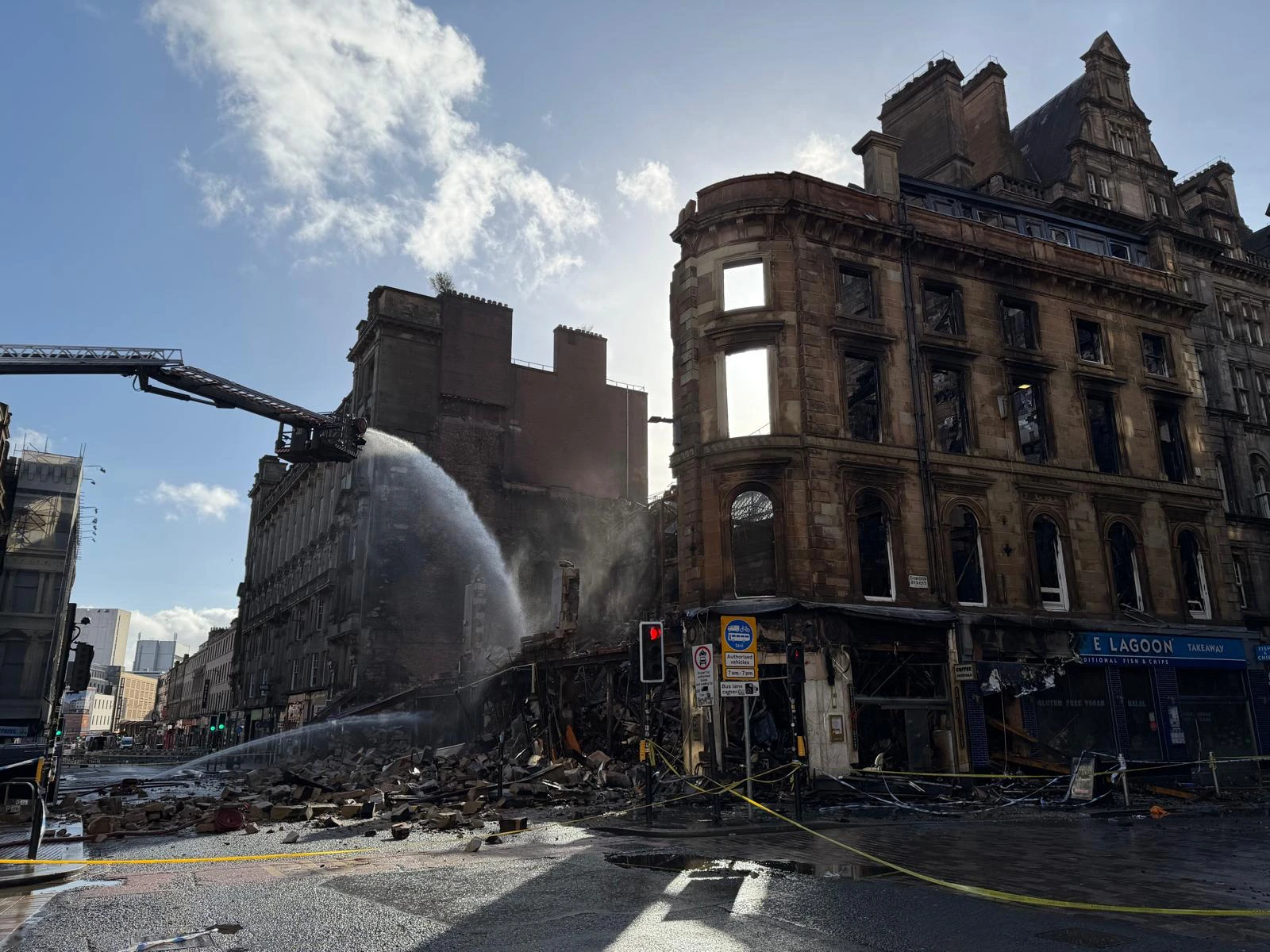
Following a catastrophic fire and the subsequent loss of the primary facade on Glasgow’s Union Street, the critical engineering challenge immediately shifted to the adjacent structures. These neighbouring, load-bearing masonry assets exhibited significant collateral distress and required immediate diagnostic clarity to prevent progressive collapse across the wider streetscape.
Our emergency response team deployed advanced non-contact LiDAR to establish a continuous spatial metrology baseline. By capturing millimetre-accurate 3D point clouds from safely outside the high-risk perimeter, we provided principal contractors and municipal authorities with forensic deformation data. This empirical tracking of progressive movement, microscopic subsidence and structural deflection allowed engineering teams to design targeted restraint systems and safely manage the wider exclusion zone.
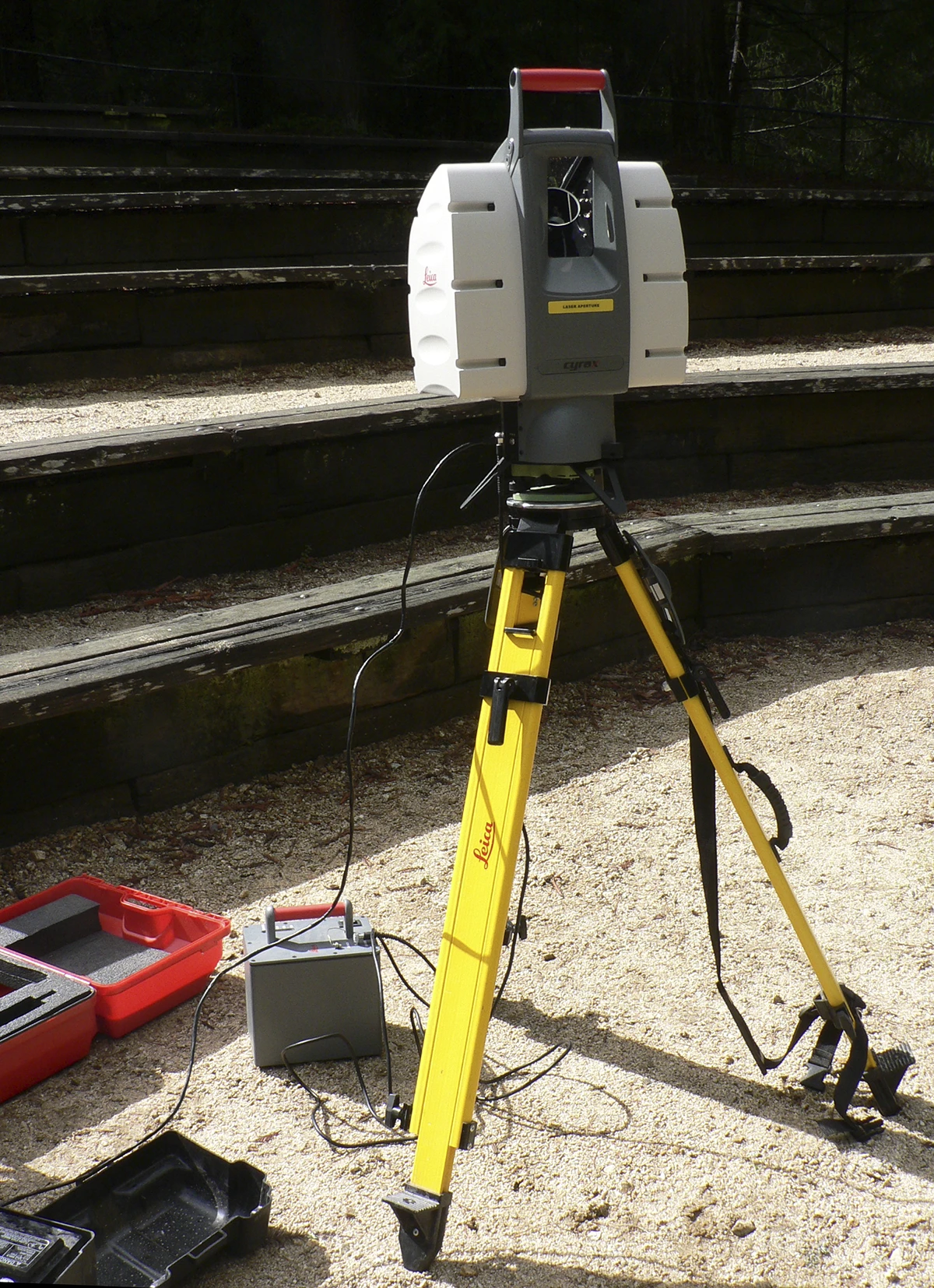
A 3D laser scan uses LiDAR technology to rapidly measure the distance between the scanner and physical objects in its line of sight. It captures millions of individual measurements, creating a highly detailed, colourised 3D digital representation of the space, known as a point cloud.
While these terms are often used interchangeably in commercial surveying, they refer to two distinct stages of the digital mapping process. Simply put: LiDAR is the hardware technology, and the point cloud is the resulting data.
LiDAR (The Acquisition Method) LiDAR (Light Detection and Ranging) is the physical diagnostic methodology. Our scanning hardware emits millions of targeted laser pulses per second, measuring the exact time it takes for each beam to reflect off a physical surface and return to the sensor. This advanced time-of-flight calculation captures millimeter-accurate spatial measurements of complex structural geometry.
The Point Cloud (The Digital Asset) A point cloud is the raw, three-dimensional digital dataset generated by that LiDAR scan. It is a dense collection of millions of individual spatial coordinates (X, Y and Z) plotted within a digital environment. When rendered together, these data points form a highly accurate “digital twin” of the physical structure, providing the definitive geometric baseline required for reverse engineering, structural analysis or direct integration into BIM workflows.
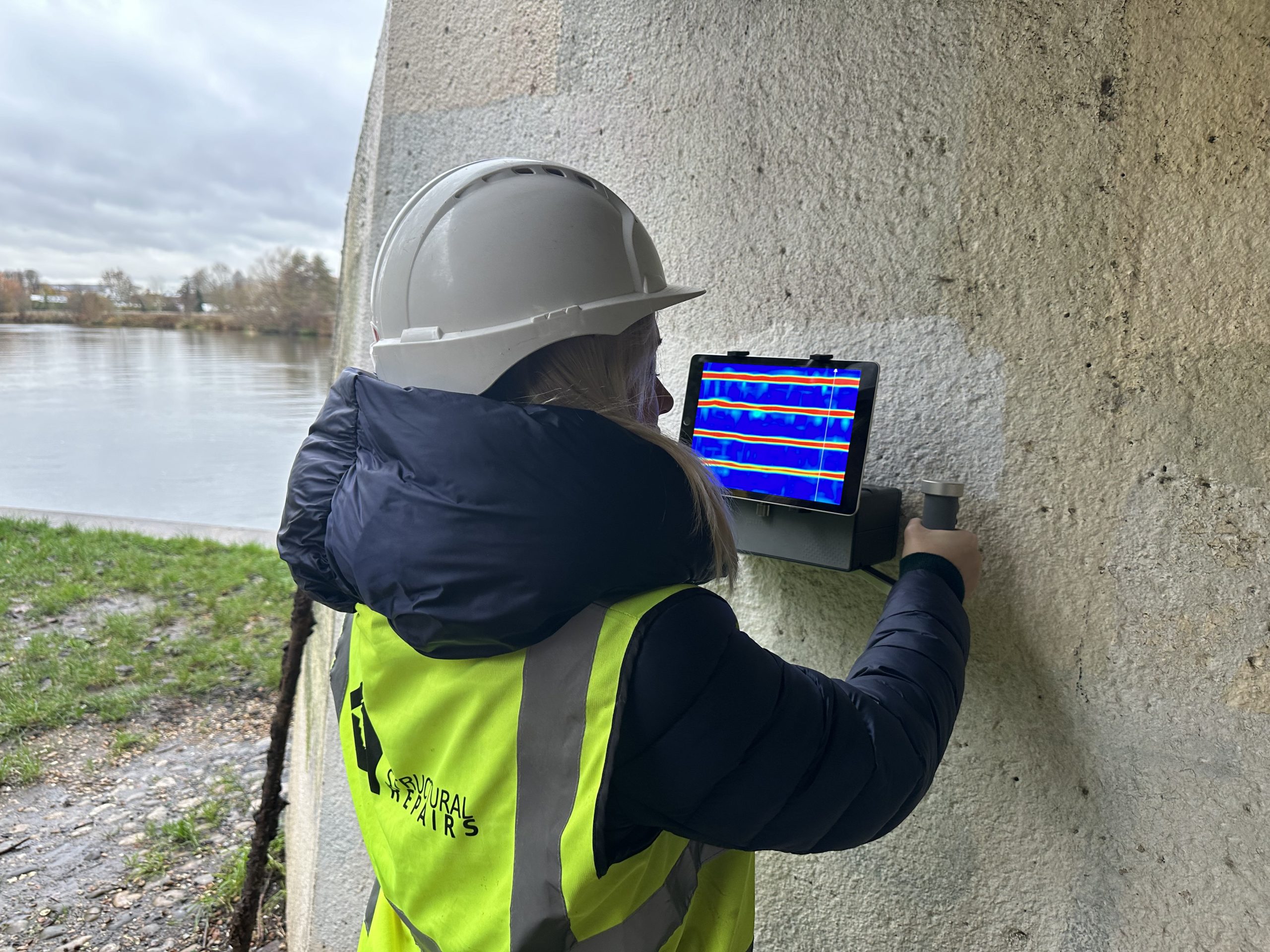
While a laser scan captures the exact surface geometry of a structure, concrete scanning (using Ground Penetrating Radar) detects the rebar, voids, and utilities hidden inside it. By combining the two, we can map the exact 3D coordinates of hidden subsurface elements relative to the physical space of the room or building.
Our high-end terrestrial laser scanners capture spatial data with sub-millimetre accuracy. This level of precision is critical for structural monitoring, reverse-engineering heritage components, or designing bespoke steelwork and carbon fibre strengthening systems.
Yes. The point cloud data we generate is fully exportable in industry-standard formats (such as .RCP, .E57, or .LAS). Your engineering and architectural teams can import this data directly into Revit, AutoCAD, or Civil 3D to serve as the foundational layer for all future design work.
No. 3D laser scanning is a completely non-intrusive, contactless process. It can be conducted in live environments, active construction sites, and operational facilities without disrupting your daily operations or causing structural damage.