Contact Us
If you have a commercial, industrial, infrastructure or heritage structural repair enquiry, contact us now. We will respond within one working day. Please note we do not provide services for domestic properties.

If you have a commercial, industrial, infrastructure or heritage structural repair enquiry, contact us now. We will respond within one working day. Please note we do not provide services for domestic properties.
Business enquiries:
Our thoughts are with the people of Glasgow, the local traders who have lost their businesseses and the city as a whole at the loss of this much-loved landmark.
Following the horrific fire at Glasgow railway station, our expert teams are up at Union Street. We have been urgently mobilised to the site, deploying advanced non-destructive scanning technology to assess the heavily damaged property. In the wake of such extreme thermal destruction, the immediate priority shifts from firefighting to forensic structural engineering. Working alongside local authorities, lead engineers and transport stakeholders, our mandate is clear: to secure the site, determine the viability of the remaining structure and explore every possible avenue to preserve what remains of this historic facade.
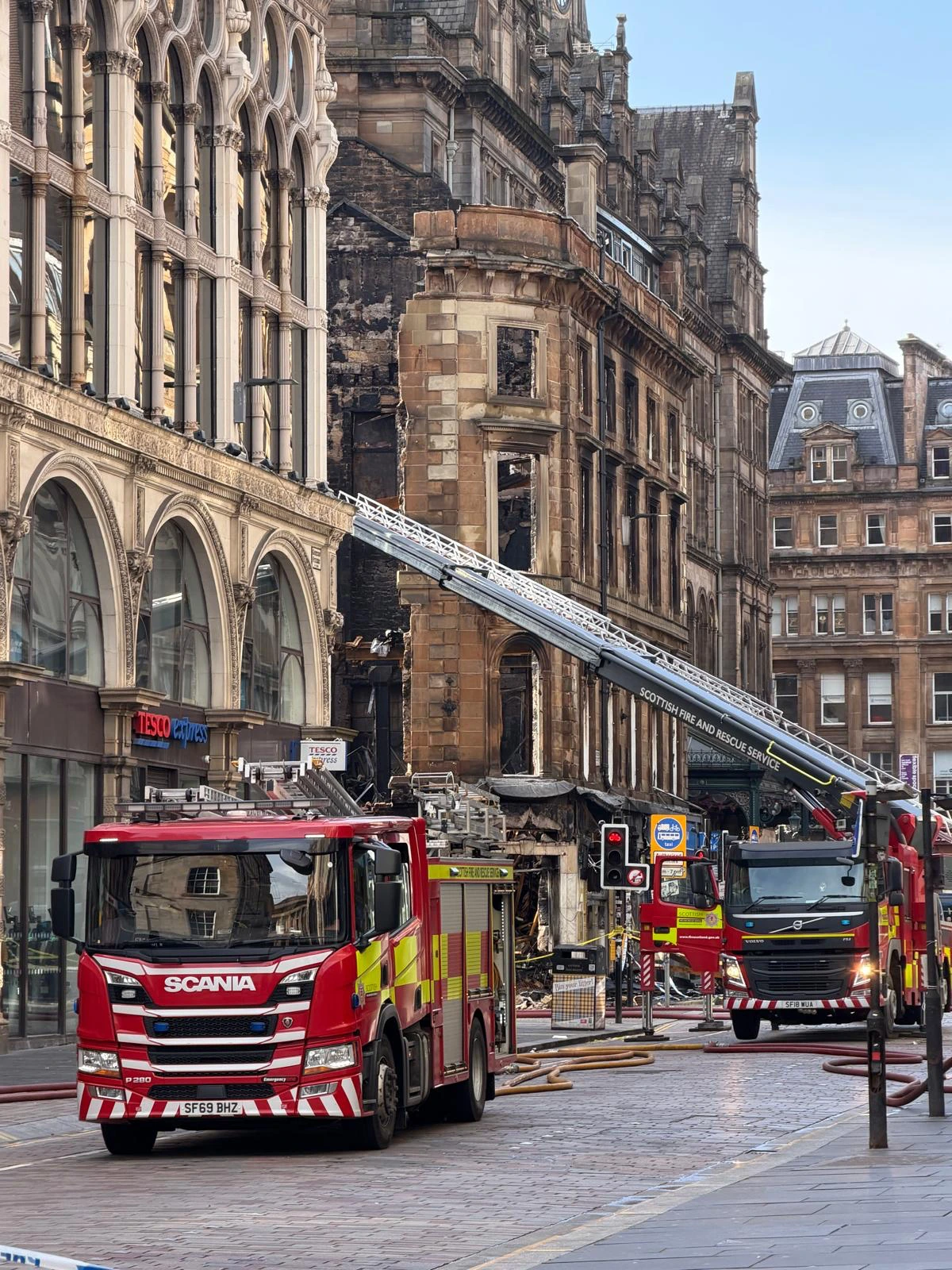
When a blaze of this magnitude consumes a multi-storey urban structure, the danger does not end when the flames are extinguished. The building is located in one of Glasgow’s busiest thoroughfares, in close proximity to major transport hubs including Glasgow Central Station.
The first and most critical objective of our deployment is to definitively establish the safety of the immediate environs. Extreme heat fundamentally alters the chemical and structural properties of building materials. Mortar joints degrade, steel reinforcement expands and structural concrete loses its compressive strength—a process known as calcination. Furthermore, the sudden introduction of cold water from high-pressure fire hoses causes rapid thermal shock, leading to severe, deep-seated fracturing across the masonry.
Before any clearing operations can safely commence, we must rule out the threat of imminent, unmanaged collapse. Our geotechnical engineers are currently on-site mapping the structural deflections, outward bowing and load-bearing failures that pose a direct threat to adjacent properties and pedestrian infrastructure.
Sending personnel into a recently extinguished, severely compromised building is an unacceptable risk. To gather the critical data required by structural engineers, we rely on remote, highly advanced Non-Destructive Testing (NDT) methodologies.
Our technicians are utilising precision 3D laser scanning equipment to capture millions of data points across the surviving structure from a safe distance. This creates an exact digital twin of the site as it stands today. By analysing this point-cloud data, our engineers can identify micro-deflections in the walls and load-bearing columns that are completely invisible to the naked eye.
For the concrete and masonry elements that remain standing, we deploy Ground Penetrating Radar. GPR allows us to see beneath the surface of the blackened walls to assess the condition of internal steel ties and reinforcement bars. Extreme heat causes metal to expand rapidly, which can blow the face off surrounding concrete and sever internal connections. GPR highlights these hidden voids and severed ties, giving us a clear picture of internal integrity.
Our reporting clearly delineates the structure into zones of viability. We pinpoint exactly which floor slabs, internal columns and retaining walls have degraded beyond the point of repair and require immediate, controlled demolition. More importantly, our diagnostics identify the structural elements that have survived the thermal load. By mapping the exact depth of the fire damage, we can provide engineered methodologies to strip away the calcified exterior layers and rehabilitate the viable core beneath.
The data harvested from our on-site scanning forms the backbone of a comprehensive structural recovery report. City planners and principal contractors rely on this definitive intelligence to make complex, high-stakes decisions regarding the building’s future.
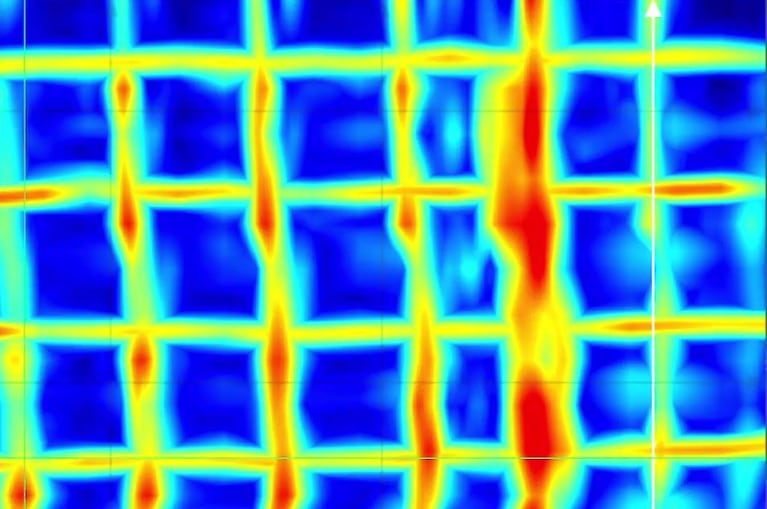
Structural diagnostics for Union Street, Glasgow, allowing engineers and architects accurately to assess the possibility of recovery.
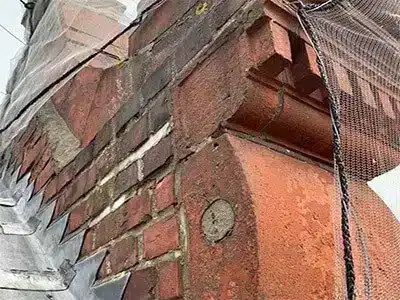
Heritage façade repairs completed by Structural Repairs
Losing the interior of a landmark building is a tragedy for local commerce, but losing the historic frontage alters the very character of a city street. A key component of our brief at Union Street is assessing the scope for preserving the heritage facade.
Glasgow is world-renowned for its historic masonry and sandstone architecture. If our scanning data confirms that the front elevation retains enough foundational stability, Structural Repairs can engineer and execute a targeted preservation programme.
This highly specialised process involves designing heavy-duty emergency propping systems that secure the facade from the exterior while the dangerous, fire-ravaged interior is carefully dismantled. Once the facade is safely isolated, we can deploy advanced masonry consolidation techniques. This includes injecting deep-penetrating structural resins to stabilise friable stonework and utilising stainless steel helical crack stitching to bind thermally fractured masonry back into a solid, load-bearing unit.
Deploying to a crisis site in a dense urban environment requires far more than just technical proficiency; it requires uncompromising operational discipline and elite industry accreditation.
Operating adjacent to major railway infrastructure like Glasgow Central Station means site protocols are subjected to the highest levels of scrutiny. Structural Repairs is fully equipped for these demanding environments. Our operations are backed by RISQS (Railway Industry Supplier Qualification Scheme) accreditation, Achilles UVDB auditing and rigorous ISO-certified safety management systems. We are trusted by Tier 1 contractors and local authorities because we bring certainty, safety and engineered precision to the most chaotic and dangerous site conditions.
The road to recovery for the Union Street site will be complex. However, through rapid-response diagnostics, precise structural reporting and expert remediation, we are committed to helping Glasgow secure this site, protect the public and preserve the architectural heritage of the city wherever physically possible.