Contact Us
If you have a commercial, industrial, infrastructure or heritage structural repair enquiry, contact us now. We will respond within one working day. Please note we do not provide services for domestic properties.

If you have a commercial, industrial, infrastructure or heritage structural repair enquiry, contact us now. We will respond within one working day. Please note we do not provide services for domestic properties.
Business enquiries:
When critical infrastructure sits beneath the waterline, out of sight cannot mean out of mind. Bridge piers, quay walls, and marine outfalls operate in the harshest physical and chemical environments on earth. Constant hydrostatic pressure, aggressive chloride attack, and tidal scour relentlessly degrade submerged concrete and steel, often with zero visible warning at the surface.
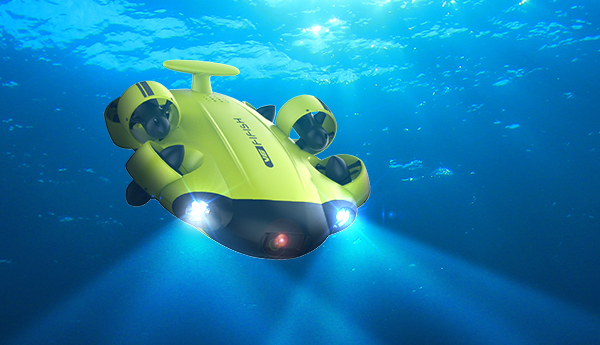
When deploying remotely operated vehicles (ROVs) for structural diagnostics, we operate advanced, high-mobility units equipped with high-definition sonar and photogrammetry arrays. Our deployment protocols align with the elite marine operational frameworks published by the International Marine Contractors Association (IMCA), providing you with mathematically precise spatial data in highly restrictive aquatic environments.
Attempting to manage marine infrastructure without empirical underwater data is a massive liability. Relying on low-tide visual assessments only reveals a fraction of the structure, leaving the most vulnerable asset components – the submerged foundations and the mud line – completely uninspected.
If tidal scour undermines a bridge pier, or submerged steel sheet piling suffers advanced section loss due to accelerated low-water corrosion (ALWC), the first sign of trouble is often a catastrophic structural failure. Furthermore, deploying commercial divers blindly into high-current or zero-visibility environments without prior reconnaissance is dangerous, inefficient, and highly expensive. You need a targeted, data-driven approach to marine surveying.
Structural Repairs brings our forensic engineering ethos beneath the surface. We deploy a dual-capability marine surveying strategy: utilising advanced underwater drones (ROVs) for rapid, high-definition reconnaissance, combined with highly qualified commercial engineering divers for tactile inspection and material sampling.
We do not just capture blurry underwater footage; we generate actionable engineering intelligence. By utilising high-resolution imaging sonar, we can map structural geometry and detect deep scour voids even in “blackwater” environments with absolute zero visibility.
The empirical data extracted from these submerged surveys – whether assessing critical bridge scour, seawall cavitation or submerged culvert degradation – is compiled into a definitive structural report. We evaluate the condition of your asset against the industry-standard marine infrastructure guidelines published by CIRIA, ensuring your subsequent remediation strategy is both fully compliant and mathematically resilient.
Safety, speed, and endurance. ROVs can be deployed rapidly into hazardous, high-current, or confined underwater environments without risking human life. They are not restricted by decompression times or extreme cold, allowing for continuous, unbroken data collection over vast areas of marine infrastructure.
While ROVs provide excellent broad-spectrum visual data, certain complex diagnostics – such as tactile weld inspection or submerged core extraction – require human intervention. To guarantee the absolute safety of our personnel and your commercial asset, all physical underwater deployments are executed in strict compliance with the Approved Code of Practice for commercial diving established by the Health and Safety Executive (HSE).
In turbid, muddy, or “blackwater” conditions, standard optical cameras are useless. To solve this, our ROVs and diving teams utilize advanced high-resolution imaging sonar. This technology uses high-frequency sound waves to map the precise structural geometry of the asset, allowing us to “see” cracks, spalling, and scour voids regardless of water clarity.
We survey all forms of submerged civil and industrial infrastructure. This includes bridge piers and abutments, coastal seawalls, harbour quay walls, sheet piling, dock gates, submerged pipelines, and industrial cooling water outfalls.