Contact Us
If you have a commercial, industrial, infrastructure or heritage structural repair enquiry, contact us now. We will respond within one working day. Please note we do not provide services for domestic properties.

If you have a commercial, industrial, infrastructure or heritage structural repair enquiry, contact us now. We will respond within one working day. Please note we do not provide services for domestic properties.
Business enquiries:
Screw piling and ground stabilisation are used where structures are affected by subsidence, settlement or weak ground, or where new foundations are required in restricted or sensitive environments.
Screw piles provide a proven, engineered solution with minimal vibration, low noise and no soil removal. They are ideal for live sites, occupied buildings and heritage assets. Piles are installed to depth until a specified torque is achieved, providing immediate confirmation of load capacity.
Ground stabilisation and slab lifting are often delivered alongside piling to arrest movement and restore performance without excavation.
By avoiding mass concrete and spoil removal, screw piling offers significant sustainability benefits while delivering long-term foundation performance.
For complex ground stabilisation projects, our diagnostic methodologies and soil consolidation strategies reflect the elite engineering principles championed by the British Geotechnical Association
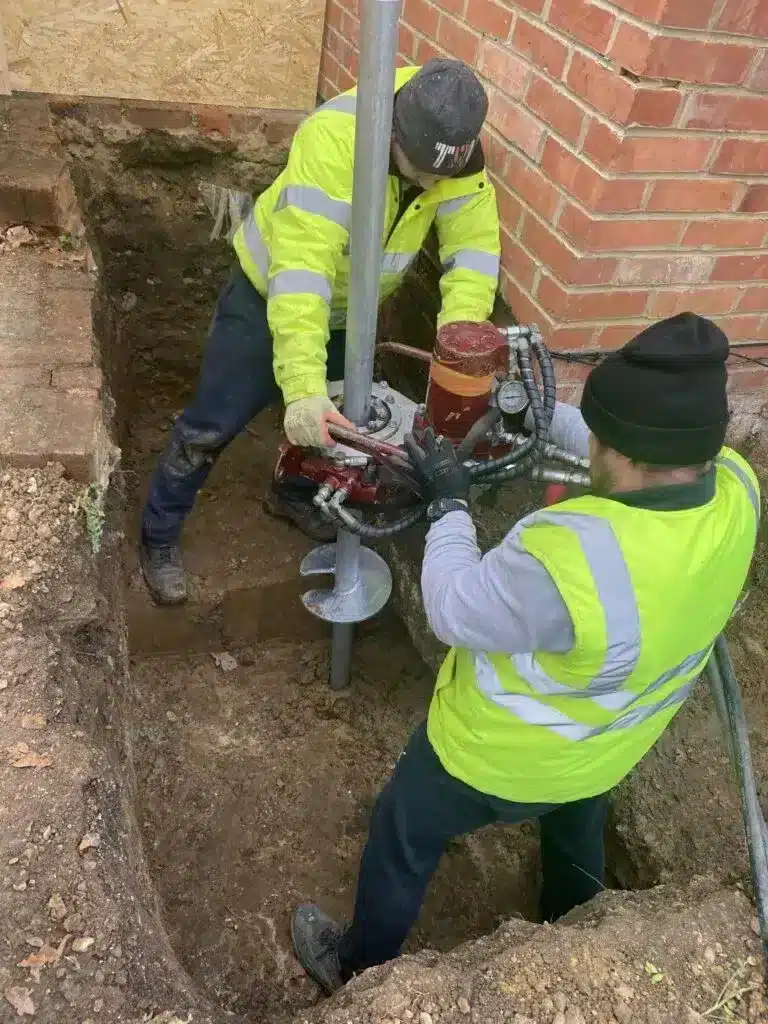
Unlike concrete foundations which require curing time and assumption-based design, screw piling is data-driven and rapid – ground engineering at its fastest.
Our engineers execute all screw piling and deep foundation installations in strict accordance with the technical standards defined by the Federation of Piling Specialists.
We often combine mechanical piling with chemical ground improvement to offer a complete geotechnical solution.
1. Remedial Underpinning: For subsiding walls, we install piles offset from the footing and transfer the building’s load onto the piles using engineered brackets. This halts movement instantly and can often lift the building back to level.
2. Ground Stabilisation & Slab Lifting: Where floor slabs have dropped due to voiding or poorly compacted fill, we use expansive geopolymer resins.
Sustainability Advantage: By eliminating mass concrete and reducing vehicle movements (no spoil removal), screw piling significantly lowers the embodied carbon of your foundation package.
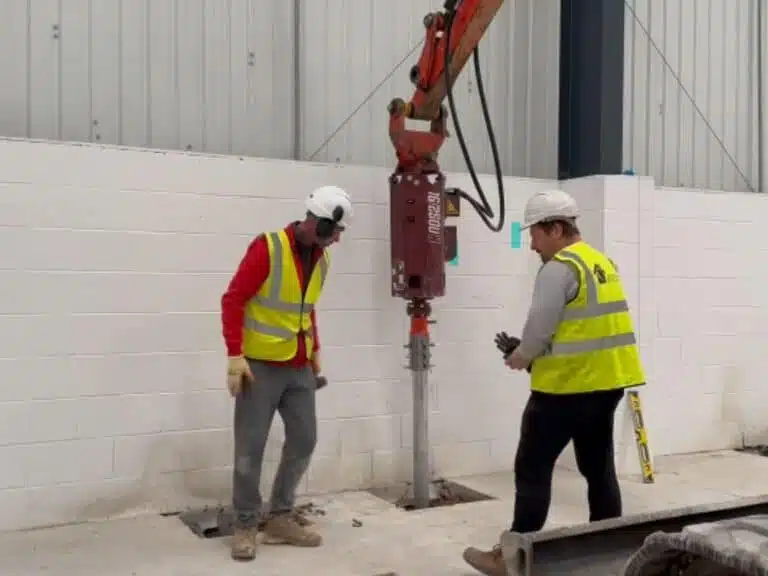
Screw Piles technique for Two New Builds Structural Repairs revolutionises foundation solutions with both screw piles and helical piles. This innovative approach triumphs in challenging sand and peat terrain, as…

Underpinning Co-Op Thornton Heath After purchasing three separate retail spaces – all situated next to one another – this Co-op store in Thornton Heath was in need of conducting an…
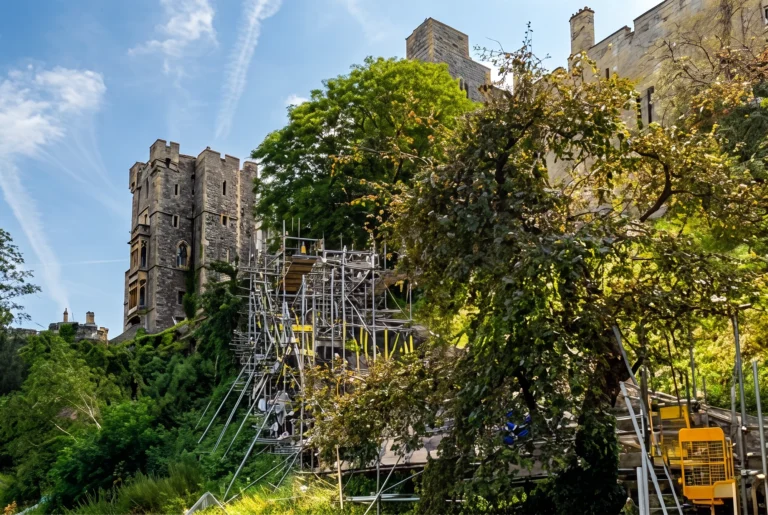
Retaining Wall Reconstruction: Windsor Estate Addressing critical structural failure on historic grounds. We engineered the safe demolition, foundation redesign and complete reconstruction of a highly unstable retaining wall to permanently…
If you are dealing with subsidence or planning a build in a restricted access zone, stop digging and start ground engineering.