Contact Us
If you have a commercial, industrial, infrastructure or heritage structural repair enquiry, contact us now. We will respond within one working day. Please note we do not provide services for domestic properties.

If you have a commercial, industrial, infrastructure or heritage structural repair enquiry, contact us now. We will respond within one working day. Please note we do not provide services for domestic properties.
Business enquiries:
A building does not need to be old to be structurally compromised. In the drive for rapid construction and compressed project timelines, latent defects are being “built-in” to modern assets at an alarming rate. These are structural flaws that exist beneath the surface of a new-build property—hidden from standard handover inspections—only to manifest years later as sudden movement, chronic damp or structural instability. Identifying these “built-in” failures early is essential for protecting your investment and establishing legal accountability.
In new-build commercial and residential blocks, latent defects often stem from systemic failures in the construction process. This can range from the omission of critical wall ties and reinforcement to the incorrect installation of complex waterproofing systems or the use of substandard concrete mixes.
Because these defects are concealed within the building envelope or foundation, they are often only discovered when the building undergoes its first period of significant thermal stress or heavy weather. By this point, the developer’s snagging period has usually expired. To secure a claim against Latent Defect Insurance (LDI) or to hold a contractor legally responsible, you need more than a visual survey. You need a forensic engineering audit that proves the failure was present from the day the first stone was laid.
Structural Repairs provides a high-level diagnostic service designed to expose the reality of a building’s construction. We apply building pathology and advanced diagnostic technology to look through the surface of modern facades and floor slabs, providing the empirical evidence required to resolve disputes and secure the asset.
New-build defects are often the result of “value engineering” or poor site supervision. Common latent issues include incorrectly poured foundations, missing structural connections or the failure to follow waterproofing specifications. These flaws are built into the structure and remain invisible until the building is subjected to its full design load or adverse weather.
Rarely. A standard RICS survey is primarily visual. It identifies “patent” defects—those that can be seen. Latent defects are concealed within the floor slabs, walls or foundations. Our service uses non-destructive testing (NDT) to “see” through these materials, uncovering the hidden flaws that a visual inspection would miss.
Yes. To be successful in an insurance claim for a latent defect, you must provide empirical proof that the fault is a result of a failure in design, materials or workmanship. Our forensic reports provide exactly that: data-driven evidence including GPR scans, core samples and boroscope footage that proves the defect was “built-in” during construction.
We frequently see failures in “Type B” basement waterproofing (where the concrete itself is supposed to be waterproof) and the omission of reinforcement in structural slabs. These issues are catastrophic if left unaddressed but can be identified early through targeted diagnostic testing.
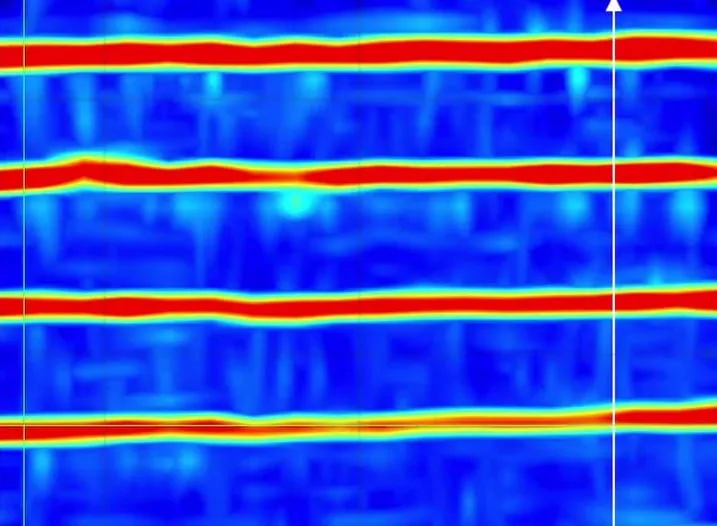
Uncovering failures in the modern built environment with latent defect diagnostics