Contact Us
If you have a commercial, industrial, infrastructure or heritage structural repair enquiry, contact us now. We will respond within one working day. Please note we do not provide services for domestic properties.

If you have a commercial, industrial, infrastructure or heritage structural repair enquiry, contact us now. We will respond within one working day. Please note we do not provide services for domestic properties.
Business enquiries:
The Royal Corinthian Yacht Club is an internationally renowned Grade II* listed coastal landmark designed by pioneering modernist architect Joseph Emberton in 1931. As a premier UK example of the early International Style, the building features bold, cantilevered concrete terraces designed to overlook the River Crouch estuary.
However, structures poured in the 1930s suffer from inherent, era-specific concrete deficiencies. Early reinforcement techniques often utilised unwashed aggregates containing marine salts, paired with highly variable cement mixing ratios and insufficient concrete cover over the internal steel. Over nearly a century of relentless exposure to airborne marine chlorides and intense moisture cycles, this poor baseline durability triggered widespread macro-cell corrosion.
Structural scanning and a detailed survey identified critical structural spalling and structural cracks as wide as 10mm slicing through the vulnerable cantilevered beams and vertical columns supporting the club’s main terrace.
Visual evidence of the degradation is stark, as captured in site photographs of the coastal access steps. Sections of the step structure leading from the terrace down to the water have completely delaminated and fallen away, crumbling into the mud below and leaving exposed, fractured edges. This advanced spalling is the visible symptom of a profound internal mechanism: rebar expansion.
While the spalls on the steps are evident, they are the visual indicator of deep-seated internal corrosion. Rebar that is not yet spalling can silently experience significant cross-sectional loss and a reduction in bond strength, making the entire structural framework weaker than it appears to the naked eye. Saltwater chloride ingress had completely neutralised the concrete’s natural alkaline defence, forcing the internal steel rebars to rust, expand up to six times their original volume, and forcefully split the historic concrete apart from the inside out. This combination of visible collapse and dangerous, invisible, internal corrosion is what made this 1930s marine structure so critically complex.
Because the repairs were located on the underside of the terrace and on tide-exposed elements like the access steps, directly over a live, shifting estuary, accessing the defects securely within narrow tidal windows presented a severe operational challenge.
Because the entire structural frame was heavily contaminated with marine salts, simply patching the visible holes would have triggered the destructive incipient anode effect. A comprehensive, electrochemical and structural approach was required.
To overcome the marine access constraints, our teams deployed specialised floating pontoons on the estuary below the Yacht Club. This provided an agile, flexible working platform that rose and fell with the water level. By meticulously scheduling operations around early morning low-tide windows, our technicians safely accessed the vulnerable beams to execute a four-stage durability intervention.
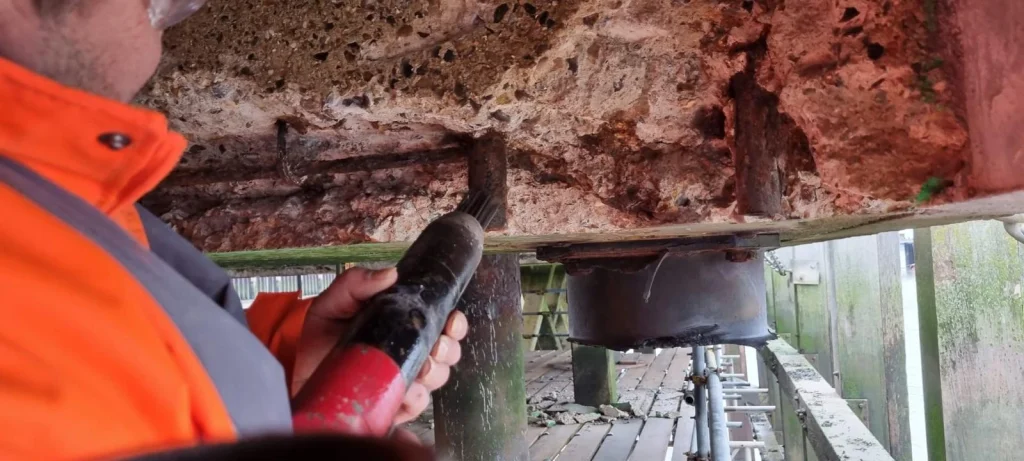
We surgically removed the diseased and spalled concrete using precision breakout techniques, exposing the corroded reinforcement bars without damaging the healthy steel cross-sections.
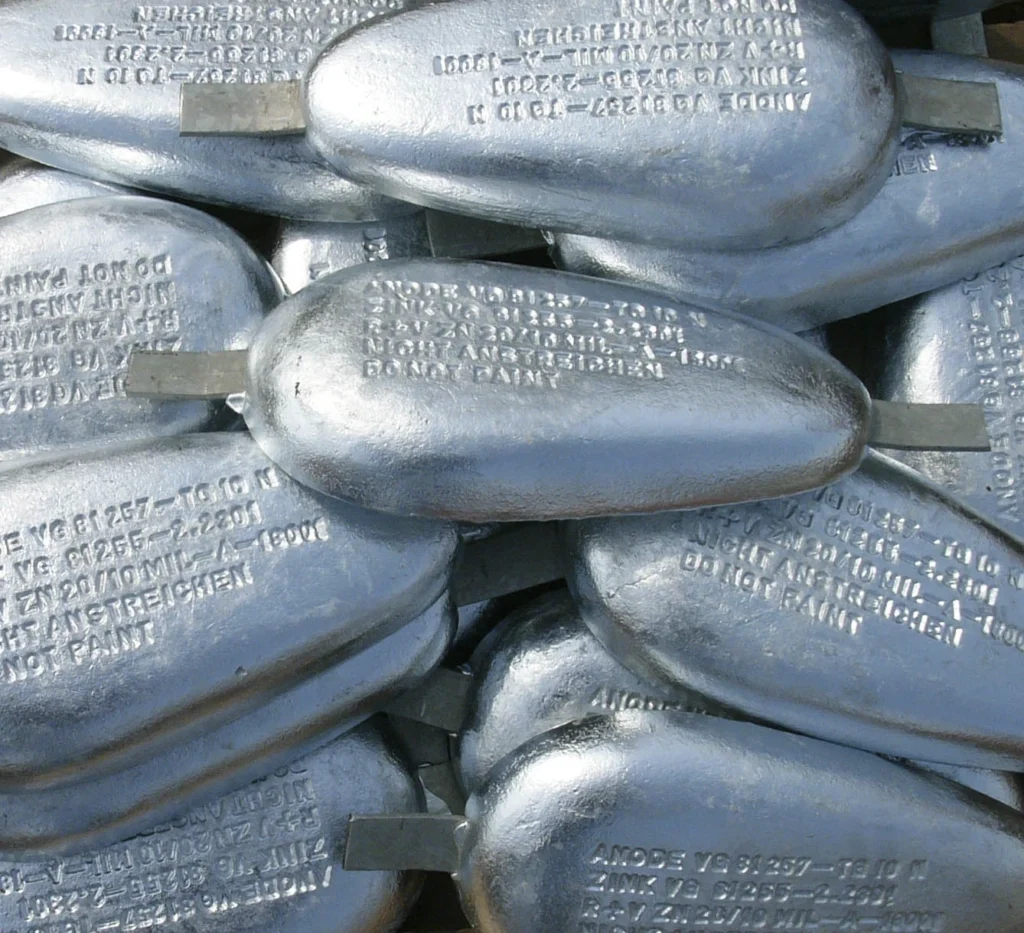
To ensure a permanent cure against the remaining chlorides, we installed a discrete galvanic cathodic protection system. High-purity sacrificial zinc anodes were wired directly to the steel reinforcement network, fundamentally altering the electrochemical environment to permanently halt active rebar corrosion.
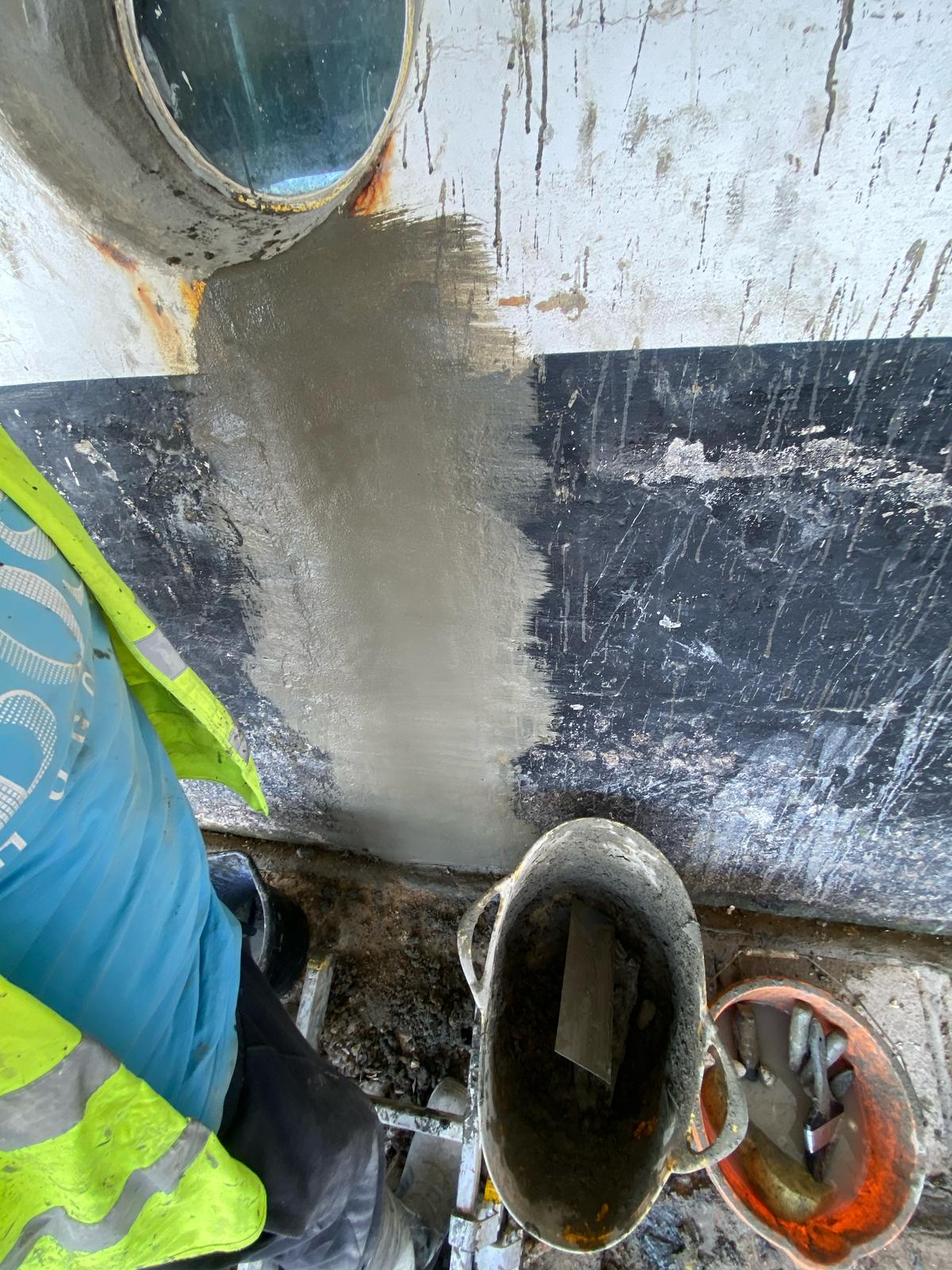
Following the stabilisation of deep internal voids via specialised resin injection, the structural framing was reconstructed. We reinstated the structural profile using premium, highly engineered BS EN 1504 compliant structural repair mortars specifically designed for aggressive coastal environments.
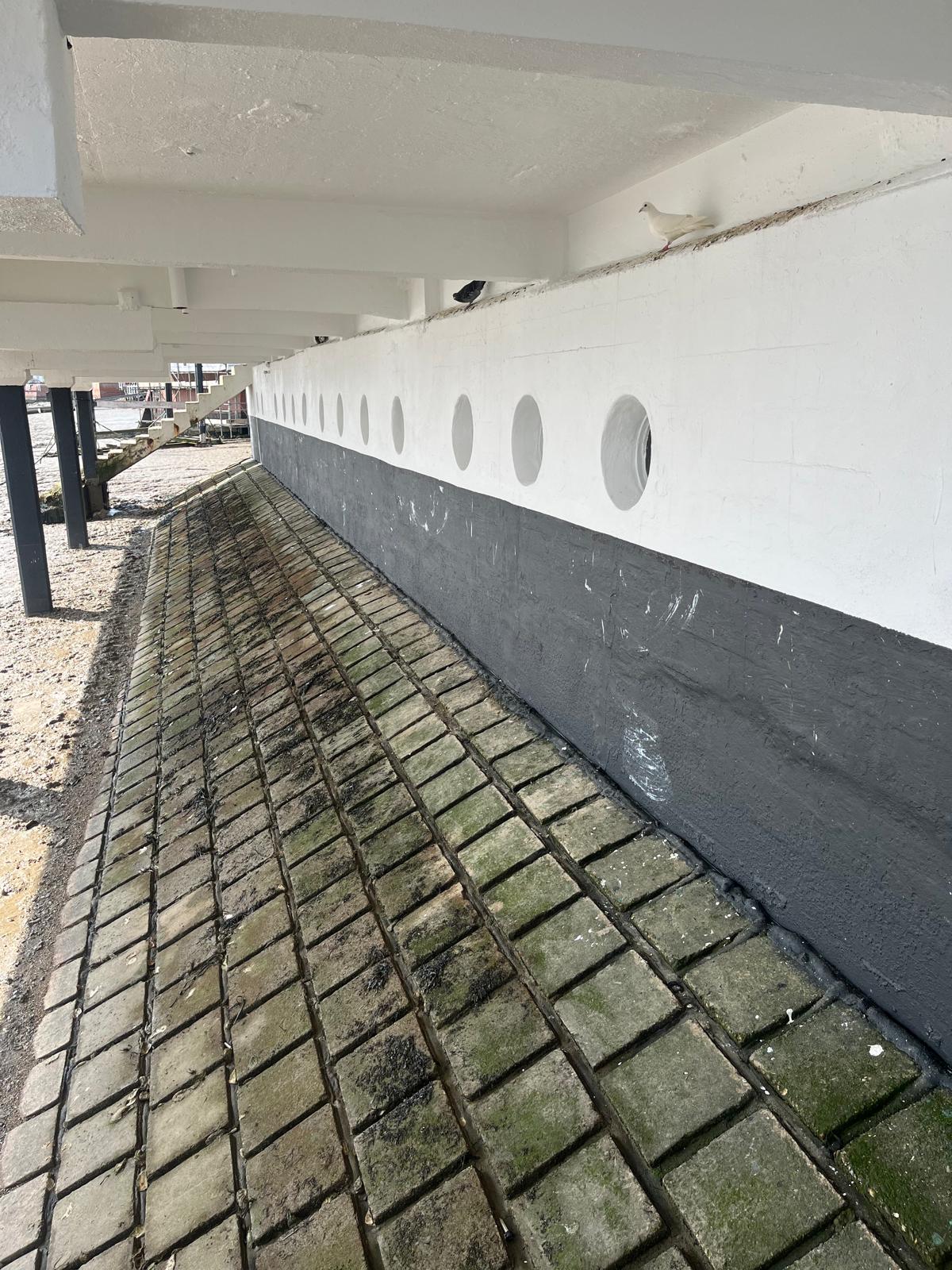
Finally, the reinstated concrete framework was finished with advanced hydrophobic resins and marine-grade coatings, acting as a permanent barrier to prevent future moisture and chloride ingress from the relentless sea spray.


By combining advanced structural scanning, floating pontoon access, and our four-stage remediation process, Structural Repairs permanently arrested the severe corrosion mechanism within the Yacht Club’s historic framework. This engineering-led durability intervention avoided the need for disruptive, high-cost structural demolition – successfully preserving Joseph Emberton’s architectural fabric and securing the asset’s operational lifespan.
Contact Structural Repairs to discuss your concrete delamination requirements and cathodic protection surveys.
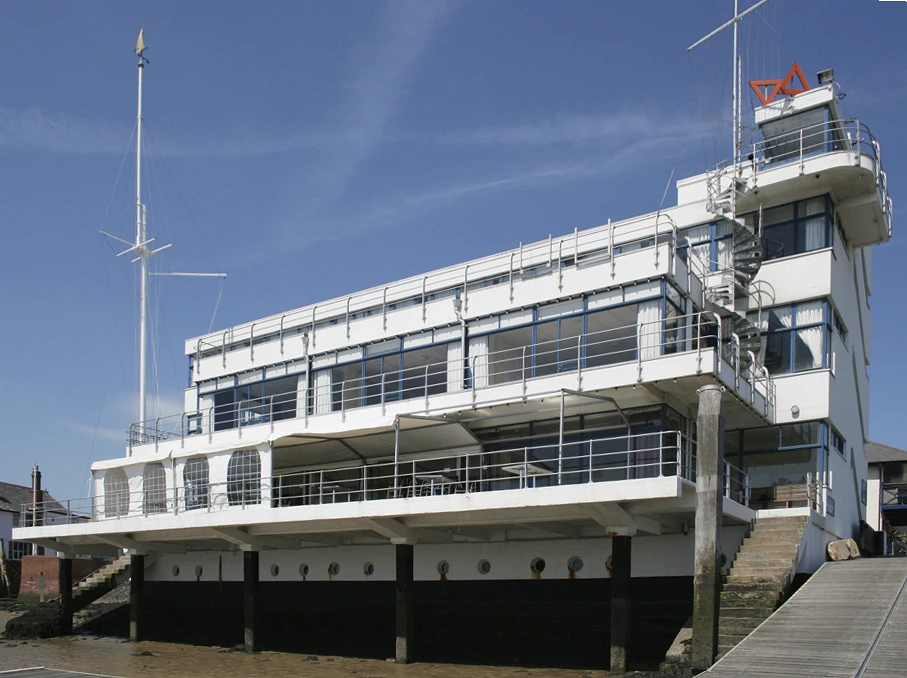
Restored to health: Royal Corinthian Yacht Club, photo courtesy of Wikimedia Commons