Contact Us
If you have a commercial, industrial, infrastructure or heritage structural repair enquiry, contact us now. We will respond within one working day. Please note we do not provide services for domestic properties.

If you have a commercial, industrial, infrastructure or heritage structural repair enquiry, contact us now. We will respond within one working day. Please note we do not provide services for domestic properties.
Business enquiries:
When managing one of the most critical logistical arteries in the South West, National Highways requires absolute structural certainty. Maintaining the massive M5 Avonmouth estuarine bridge is an immense engineering challenge – asset managers must constantly monitor for concrete degradation, rebar corrosion and bearing fatigue to prevent catastrophic failure.
At Structural Repairs, we know that permanent, effective concrete repair begins with empirical data. To capture this data on the M5 Avonmouth River Crossing, we deployed a groundbreaking approach, combining Visual Bearing Inspections with Ground Penetrating Radar (GPR) using autonomous robotic crawlers.
This advanced methodology delivered comprehensive asset coverage, marking a significant step forward in how we diagnose and engineer remediation strategies for tier-one infrastructure.
The M5 Avonmouth River Crossing handles over 70,000 vehicle crossings every single day. Closing lanes to erect scaffolding or deploying heavy access platforms to inspect the piers causes unacceptable disruption to the strategic road network.
However, National Highways required near 100% asset coverage to meet strict SBIM (Structural Building Information Modelling) contract specifications. They needed high-quality data regarding the condition of the bridge support bearings and the integrity of the concrete cover protecting the internal steel reinforcement.
Traditionally, capturing this data required rope access teams suspended high above the tidal estuary – a slow, high-risk methodology. We needed a solution that eliminated working at height while providing the exact diagnostic clarity required to specify future preventative structural maintenance.
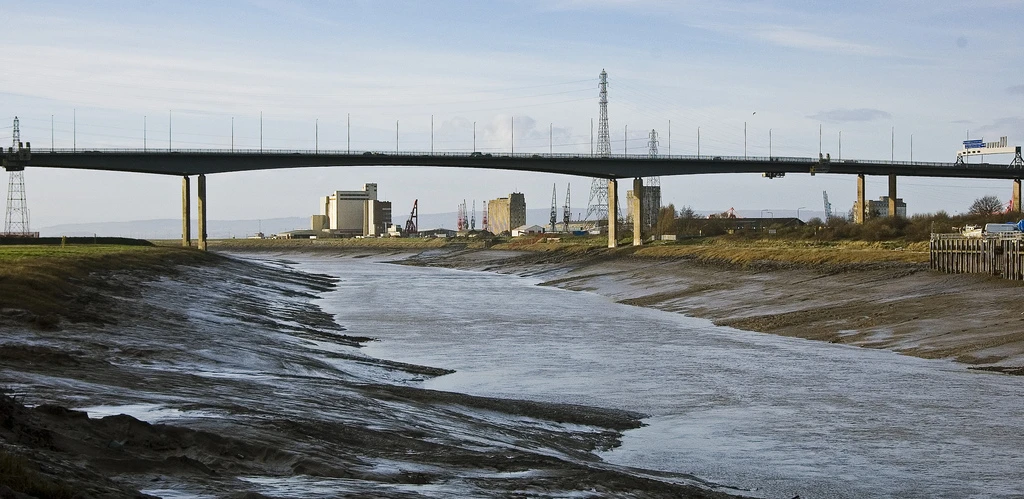
The M5 Avonmouth Crossing carries one of the UK’s main transport arteries. By April 2004, by Joe D. – April 2004, by Joe D., CC BY-SA 1.0,
To meet the strict inspection standards without disrupting traffic or endangering personnel, Structural Repairs deployed an advanced robotic crawler system.
Instead of putting humans on ropes, we sent robots up the piers. These highly agile crawlers were equipped with interchangeable diagnostic payloads, combining high-definition optics for visual inspections with deep-penetrating GPR technology for concrete condition assessments.
The robotic crawlers navigated the sheer vertical faces of the bridge structure, targeting the most critical structural nodes:
This dual-pronged approach allowed us to capture the critical engineering data required to specify targeted concrete rehabilitation – all without a single lane closure or traffic delay.
The deployment of robotic crawlers delivered remarkable outcomes for National Highways, setting a new benchmark for structural diagnostics:
By partnering with an integrated specialist engineering contractor, asset owners can ensure that emerging structural problems are identified and resolved early. We do not just capture data; we use it to engineer the exact interventions required to safely extend the lifespan of critical infrastructure.
Structural Repairs is a leading global specialist in civil infrastructure preservation. Discover how our Non-Destructive Testing (NDT) and advanced concrete repair methodologies can protect your assets and lower your long-term capital costs.
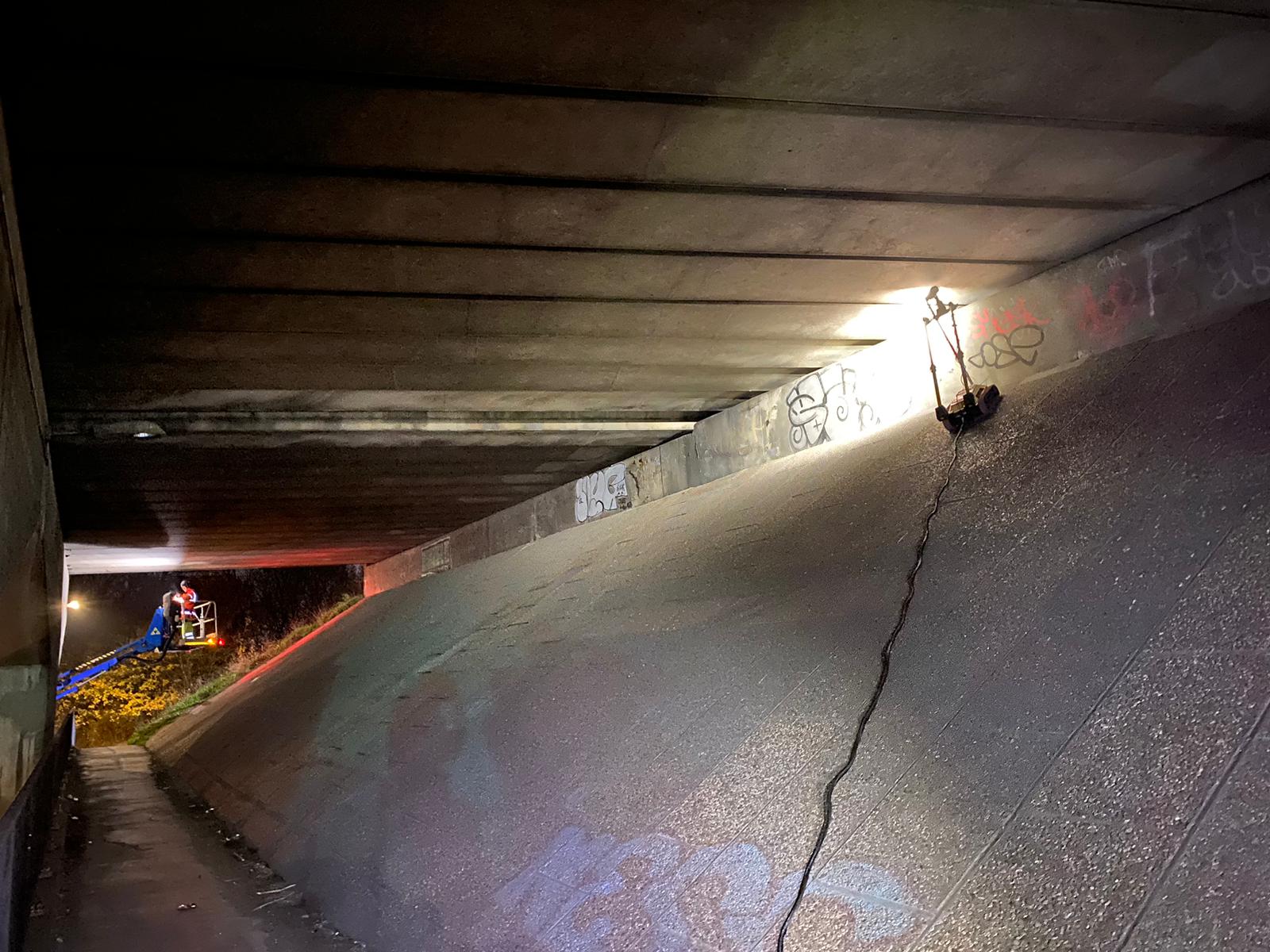
Structural Repairs team operating robotic crawler for GPR survey on M5 Avonmouth Bridge