Contact Us
If you have a commercial, industrial, infrastructure or heritage structural repair enquiry, contact us now. We will respond within one working day. Please note we do not provide services for domestic properties.

If you have a commercial, industrial, infrastructure or heritage structural repair enquiry, contact us now. We will respond within one working day. Please note we do not provide services for domestic properties.
Business enquiries:
When asset managers and facility directors procure concrete remediation services, there is a dangerous tendency to view all repairs as equal. However, applying a cosmetic patch to a spalling column is fundamentally different from wrapping that column in aerospace-grade carbon fibre.
To ensure structural safety and allocate capital effectively, infrastructure owners must understand the Structural Repairs technical framework: The Two Dimensions of Structural Intervention.
Every engineering intervention falls into one of two distinct categories: works designed to restore durability and functionality, and works designed to increase the original load-bearing capacity. Understanding the threshold between the two is critical.
To illustrate how these two dimensions dictate our engineering response, consider how we approach complex remediation across different infrastructure types, using our own completed projects as the benchmark:
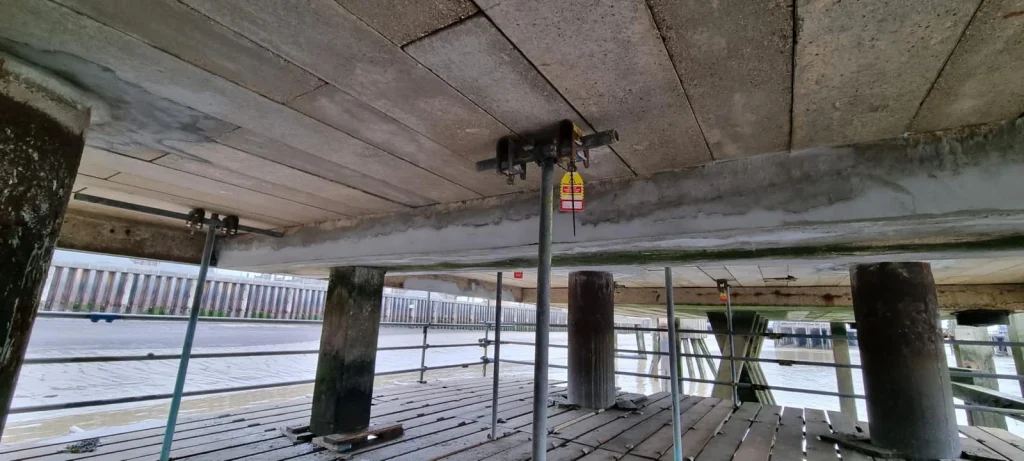
Durability Intervention (Preservation): Marine structures are relentlessly subjected to tidal chloride ingress, leading to severe rebar corrosion and concrete spalling. At our Robins Wharf project in Gravesend, we engineered a comprehensive durability intervention. Our teams installed complex temporary propping to safely unload the deck, broke out the contaminated concrete on the tidal piles and soffit beams, and reinstated the structural profile using marine-grade, BS EN 1504 compliant repair mortars. This extensive remediation halts the degradation and restores the asset’s durability and functionality, but it does not increase the original load-bearing capacity beyond its initial design parameters.
Capacity Intervention (Strengthening): If a marine asset – such as a commercial wharf or jetty – were being reclassified to handle heavier dockside plant machinery or larger vessel mooring loads, preservation would be insufficient. In that scenario, we would need to execute structural pile augmentation or install bespoke CFRP wrapping systems to actively increase the original load-bearing capacity of the structure to safely manage the new operational stresses.
Durability Intervention (Preservation): If a retaining wall is structurally stable but suffering from superficial masonry degradation or blocked weep holes causing minor water ingress, we execute a durability intervention. We reinstate the drainage systems and inject the structural cracks with hydrophobic resins. This prevents further freeze-thaw damage and restores durability, but it does not increase the original load-bearing capacity of the wall.
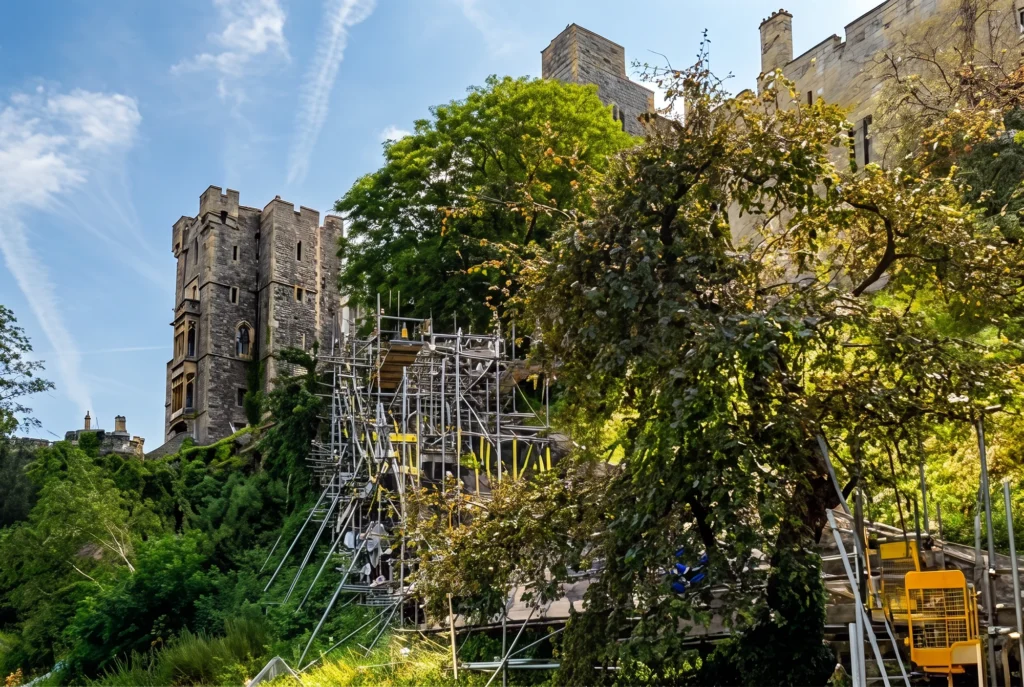
Capacity Intervention (Strengthening): When a structure is actively failing under excessive earth pressures, preservation is not enough. At our retaining wall failure project in Windsor, the structure was experiencing severe deflection and overturning forces due to massive soil surcharge. We executed a full capacity intervention. By engineering a solution that integrated advanced anchoring and structural reinforcement, we actively increased the original load-bearing capacity of the retaining wall, permanently arresting the movement and preventing a catastrophic collapse.
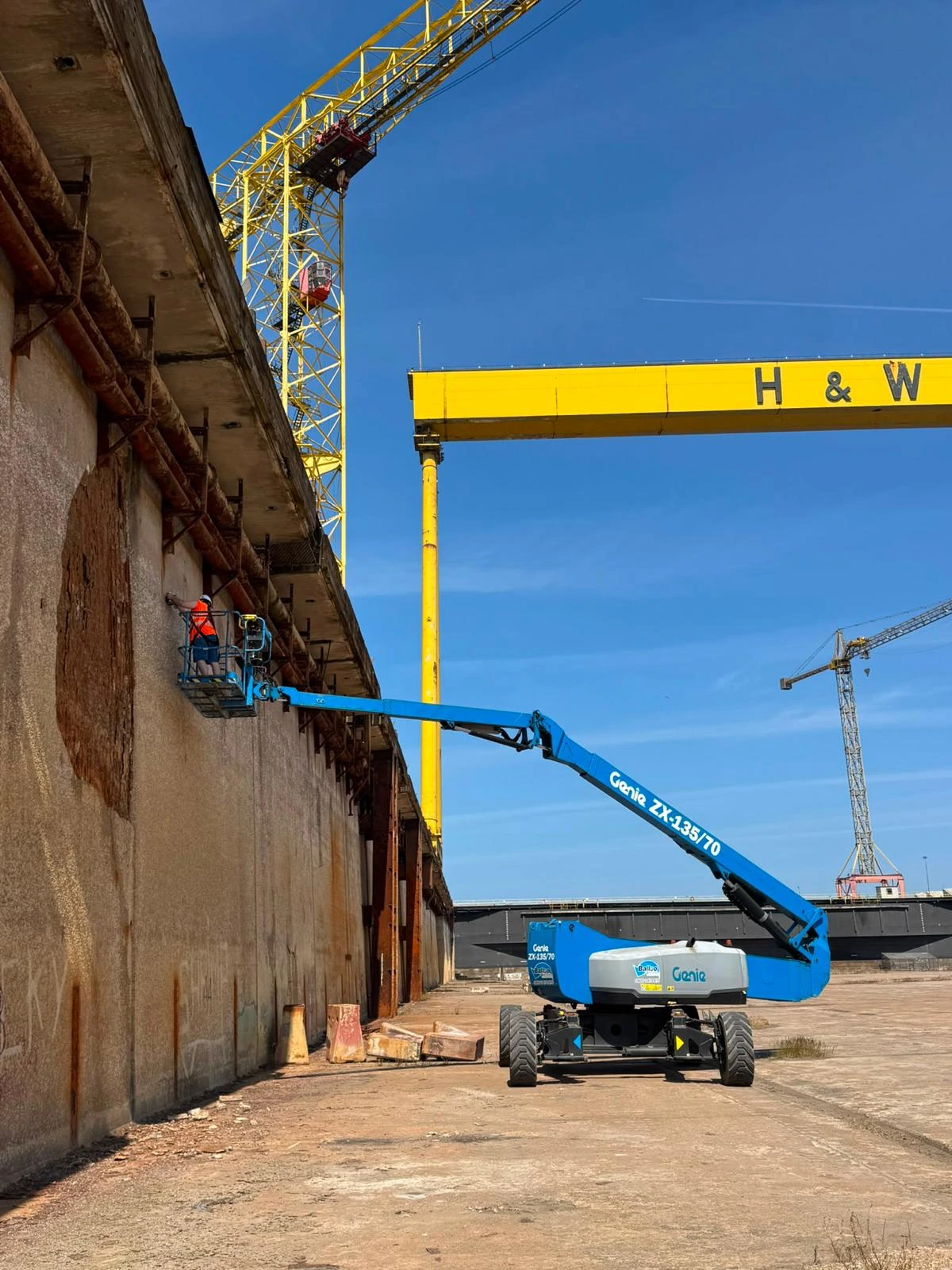
Durability Intervention (Preservation): Historic industrial infrastructure often requires highly sympathetic, chemically complex interventions. At the iconic Harland & Wolff dry docks, the marine concrete was suffering from decades of aggressive chloride attack. We executed a pure durability intervention using advanced cathodic protection. By embedding sacrificial anodes and applying specialist structural mortars, we altered the electrochemical environment to halt the rebar corrosion. This preserved the historic fabric and restored long-term durability, but it does not increase the original load-bearing capacity of the dock walls.
Capacity Intervention (Strengthening): If an industrial facility is undergoing a change-of-use – for example, a historic manufacturing plant being upgraded to house modern, high-tonnage robotic assembly lines – restoring the old concrete is not enough. We must deploy advanced structural steel augmentation or post-tensioning to actively increase the original load-bearing capacity of the floors and load-bearing columns to accommodate the new dynamic vibrations and dead weights.
Applying the wrong intervention dimension to a failing structure is a costly – and potentially dangerous – mistake. Asset managers, structural engineers, and procurement teams must ensure that their chosen remediation strategy aligns perfectly with the actual physical demands placed on the infrastructure.
If you are unsure whether your asset requires surface preservation or physical strengthening, our diagnostic teams can provide the empirical data needed to make that decision.
Whether your asset requires advanced preservation to restore durability or complex composite engineering to increase its load-bearing capacity, Structural Repairs provides the single-source, integrated solution. We bridge the critical gap between diagnostic data and physical execution.