Contact Us
If you have a commercial, industrial, infrastructure or heritage structural repair enquiry, contact us now. We will respond within one working day. Please note we do not provide services for domestic properties.

If you have a commercial, industrial, infrastructure or heritage structural repair enquiry, contact us now. We will respond within one working day. Please note we do not provide services for domestic properties.
Business enquiries:
For asset owners, facility managers, and civil engineers, navigating the terminology of infrastructure repair can be a minefield. Two terms are frequently – and dangerously – conflated: Concrete Rehabilitation and Structural Strengthening.
While both involve complex engineering works on existing assets, they serve fundamentally different purposes. At Structural Repairs, our engineering methodology relies on a simple primary differentiator: the goal of the intervention.
Are we intervening to preserve the asset and restore its original lifespan, or are we intervening to upgrade its capacity to handle new, unforeseen loads? Understanding this distinction is the foundation of safe, cost-effective asset management.
Concrete rehabilitation is an intervention where the primary goal is preservation and restoration. Over time, environmental factors – such as marine chlorides, freeze-thaw cycles, and carbonation – break down the protective alkalinity of concrete. This allows the internal steel reinforcement to corrode, expand, and cause the concrete to spall.
Rehabilitation does not aim to make the structure stronger than it was on the day it was built. Instead, it aims to arrest the decay, treat the root cause of the deterioration, and restore the structure’s original durability and functionality.
Our work at the historic Harland & Wolff dry docks was a pure rehabilitation project. We halted decades of aggressive marine chloride attack to preserve the historic infrastructure, restoring its durability without altering its load-bearing mandate.
A perfect example of concrete rehabilitation is our work at Robins Wharf, a live commercial jetty. The marine concrete was suffering from severe chloride-induced corrosion, leading to delamination on the primary tidal piles. Our goal was pure preservation. We installed complex temporary propping to safely unload the deck, broke out the contaminated concrete, treated the reinforcement, and applied rapid-curing marine mortars. We successfully rehabilitated the asset – restoring its durability and functionality – without altering its original design capacity.
Structural strengthening is an intervention where the primary goal is capacity upgrading. In these scenarios, the asset is often structurally sound but is being subjected to stresses, loads, or environmental pressures that far exceed its original design parameters.
Strengthening involves physically altering the load paths, shear capacity, or flexural strength of an asset. This is required when a building undergoes a change of use, a bridge is reclassified for heavier traffic, or a retaining structure is failing under increased soil surcharge.
Our intervention on a failing retaining wall in Windsor is a textbook structural strengthening project. The structure was experiencing severe deflection and overturning forces due to massive new soil pressures that exceeded what the wall was originally built to hold. Patching the concrete would have achieved nothing. Instead, we executed a strengthening program – installing advanced ground anchors and structural reinforcement to actively upgrade the wall’s load-bearing capacity and prevent a catastrophic collapse.
Selecting the correct intervention requires empirical diagnostic data. To assist procurement teams, we use the following decision matrix to categorise the required approach based on primary asset condition indicators.
The greatest risk in infrastructure maintenance is the conflation of these two categories.
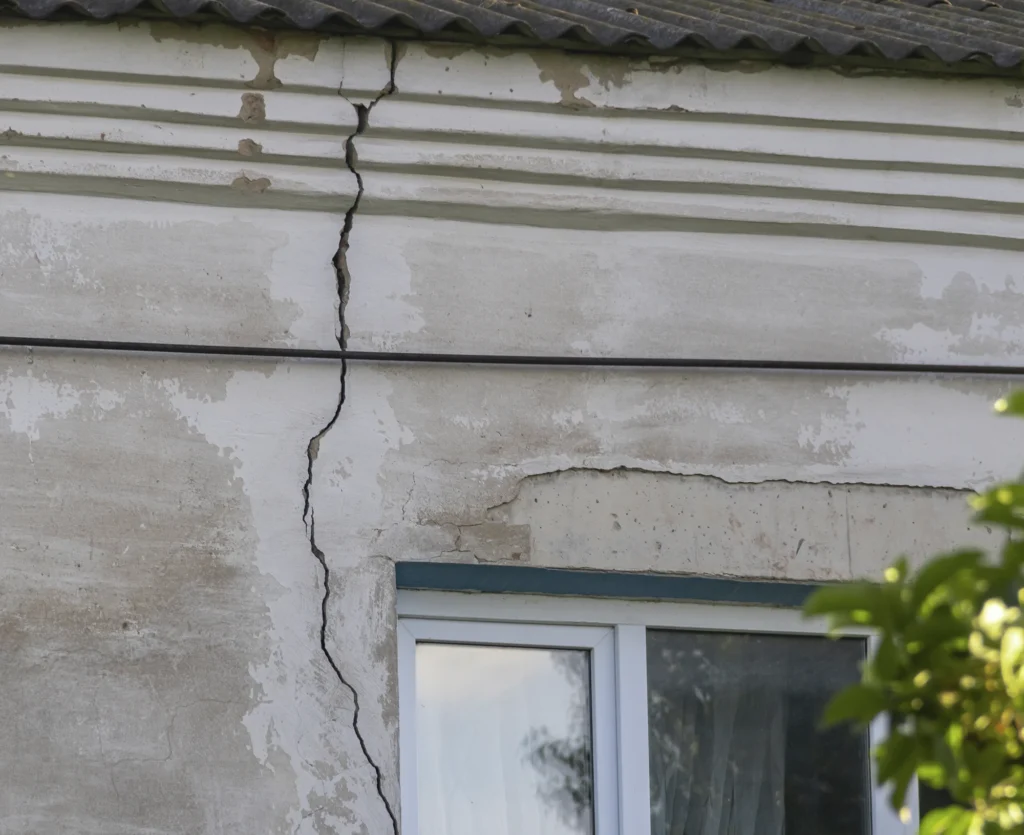
Applying a high-strength structural mortar to a spalled column restores its durability, but it does not magically increase the amount of weight that column can hold. Rehabilitation simply ensures the column does not fail under its current design load.
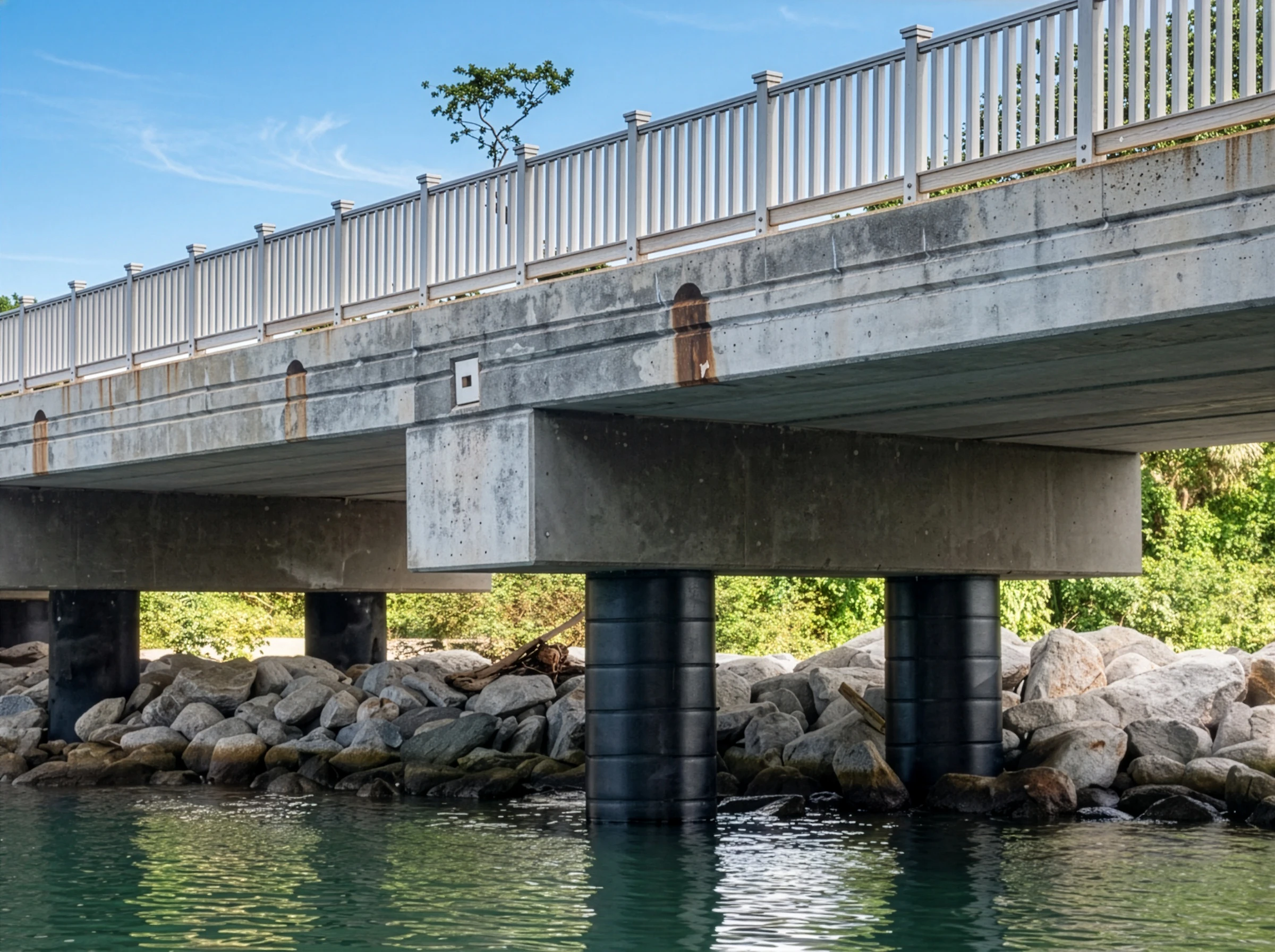
CFRP wrapping is an incredible strengthening tool, but if you wrap a column that is actively corroding from the inside, the rust-jacking will simply tear the structure apart beneath the expensive composite wrap. You cannot strengthen a diseased asset without rehabilitating it first.
In major civil infrastructure projects, these two approaches are rarely mutually exclusive. In fact, severe structural decay often leads to a loss of capacity, requiring a fully integrated approach.
If a highway bridge has lost 30% of its steel reinforcement cross-section to severe corrosion, our teams must execute a dual-phase intervention. First, we perform Concrete Rehabilitation (breaking out the contaminated concrete and installing cathodic protection). Second, we execute Structural Strengthening (applying CFRP wrapping) to physically replace the tensile strength lost to the decades of rust.
By bridging the gap between advanced preservation and complex structural upgrading, Structural Repairs provides a single-source solution for the entire lifespan of your asset.
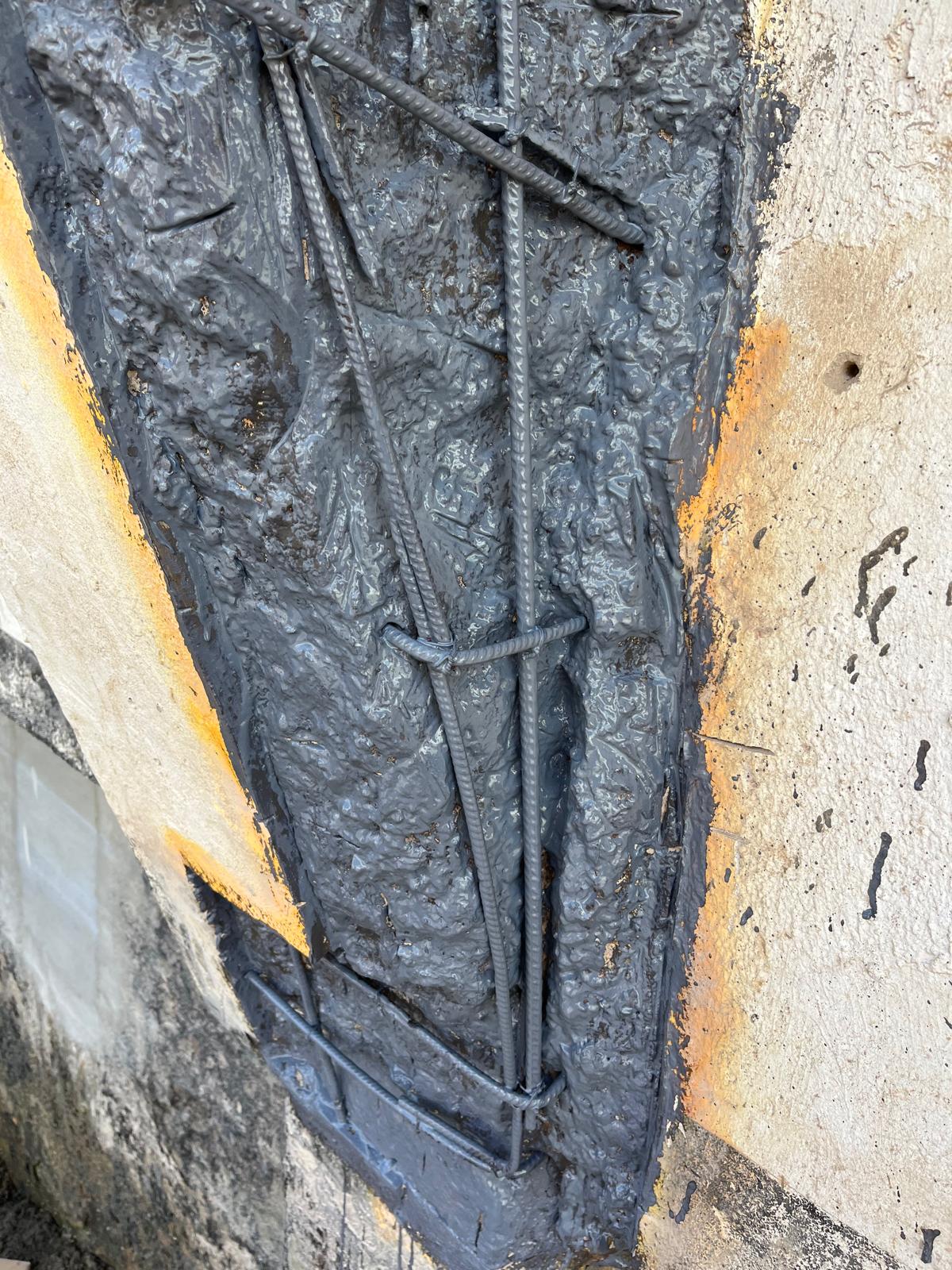
Marine repairs at the Royal Corinthian Yacht Club – concrete rehabilitation in action.