Contact Us
If you have a commercial, industrial, infrastructure or heritage structural repair enquiry, contact us now. We will respond within one working day. Please note we do not provide services for domestic properties.

If you have a commercial, industrial, infrastructure or heritage structural repair enquiry, contact us now. We will respond within one working day. Please note we do not provide services for domestic properties.
Business enquiries:
A building is only as viable as the ground it stands on and the monolithic continuity of its foundations. When soil conditions change, subterranean voids form, or load-bearing concrete cracks, the entire structural geometry of the asset is compromised. Sinking foundations, stepped masonry cracking, and expanding structural fissures are critical warning signs that the building’s fundamental support system is failing.
Ignoring foundation movement or deep structural cracking guarantees exponential damage. As subsidence progresses, the transfer of loads becomes uneven, stressing structural nodes that were never designed to carry those forces. This leads to severe internal deflection, compromised waterproofing, and eventually, partial or total structural condemnation.
Traditional mass-concrete underpinning or crude crack-filling often exacerbates the problem. Simply pouring more concrete into the ground without precise geotechnical data adds unnecessary dead weight, which can trigger further settlement. Likewise, injecting a superficial filler into a structural crack does nothing to restore the tensile strength of the concrete matrix, leaving the asset highly vulnerable to dynamic loads and water ingress.
Structural Repairs treats foundation failure and structural cracking as precision engineering challenges. We utilise comprehensive geotechnical data and advanced material science to design interventions that permanently stabilise the asset with minimal disruption to the surrounding environment.
When dealing with foundation settlement and structural fracturing, asset managers need precise engineering data to make informed decisions. Here are the answers to the most common questions regarding structural injection and underpinning.
Epoxy resin injection is used for structural restoration. It cures to form a high-strength, rigid bond that is stronger than the host concrete, effectively welding static structural cracks back together to restore load-bearing capacity. Polyurethane (PU) resin is used for void filling and waterproofing. It rapidly expands upon contact with moisture to form a flexible, impermeable foam, making it ideal for consolidating loose soils and stopping active hydrostatic leaks.
The most critical indicators of foundation failure include diagonal or “stepped” cracking in exterior brickwork, noticeable sinking or sloping of ground-floor slabs, gaps appearing around door frames and window sills, and doors that suddenly begin to stick or jam. These symptoms indicate that the soil beneath the asset is consolidating unevenly, requiring soil stabilisation or underpinning to arrest the movement.
Yes, provided the crack is static (non-moving) and the correct resin is specified. When we inject high-modulus structural epoxies deep into a concrete fissure, the resin fuses the matrix together. The cured epoxy possesses a higher tensile and compressive strength than the original concrete, making it a permanent, BS EN 1504 compliant structural reinstatement.
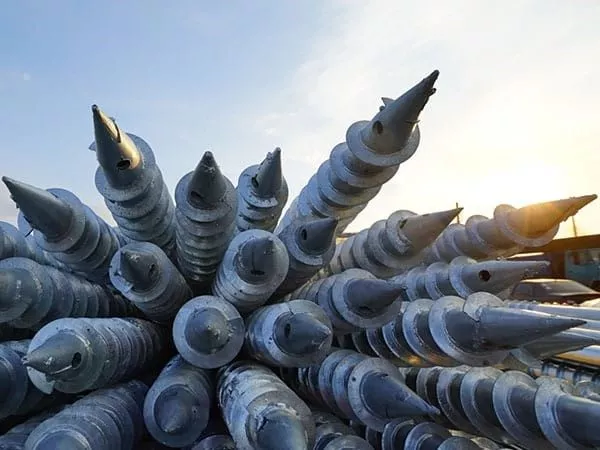
Modern underpinning is vastly less disruptive than historical methods. Rather than executing massive, disruptive open-trench excavations, Structural Repairs deploys advanced micro-piling, helical screw piling, and geopolymer resin injection. These techniques require minimal heavy plant machinery, produce very little vibration, and can often be executed while the commercial asset remains fully operational.