
Reduce risk, avoid programme delays and make decisions based on evidence – not assumptions.

When a concrete structure fails – whether it is the seawall of a historic dry dock, the support pier of a motorway flyover, or the deck of a multi-storey car park – the visible symptom is almost always the same: cracked, spalling concrete and exposed, rusting steel.
However, the true danger does not start when the concrete falls. It begins decades earlier, silently and invisibly, driven by a relentless chemical attack known as chloride-induced corrosion.
Across the civil and commercial engineering sectors, chlorides are the undisputed ultimate enemy of reinforced concrete. At Structural Repairs, we encounter this specific pathology daily. To understand why infrastructure requires specialist structural concrete repair, asset managers must first understand the aggressive mechanics of the chloride threat.

The Öresund Bridge between Denmark and Sweden suffers constant chloride-based attacks from sea air and water and salt-gritting of the carriageways in winter.
A Cross-Sector Epidemic
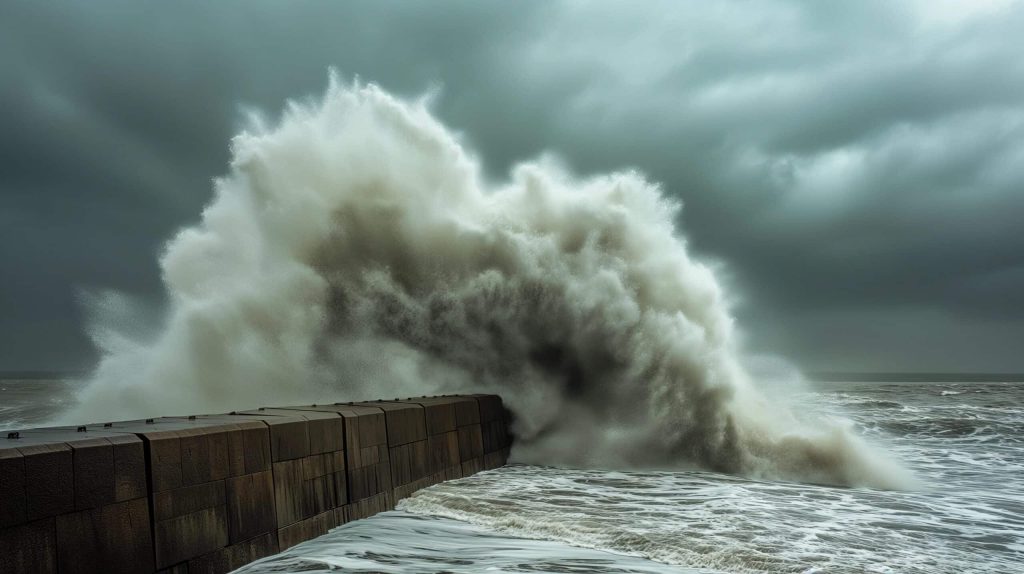
Marine and Coastal Assets
Unsurprisingly, marine infrastructure faces the highest baseline threat. Seawalls, jetties, and historic assets like the Harland & Wolff dry docks are constantly battered by saltwater spray and submerged in intertidal zones, leading to rapid, deep-seated chloride saturation.

Highway Bridges and Viaducts
During the winter months, the UK’s strategic road network is heavily treated with de-icing salts. Thousands of tonnes of chlorides are sprayed directly onto bridge decks and viaduct piers or cast into aerosolised spray by high-speed HGV traffic. This relentless chemical bombardment is the primary reason mega-structures like Spaghetti Junction require continuous monitoring and remediation.
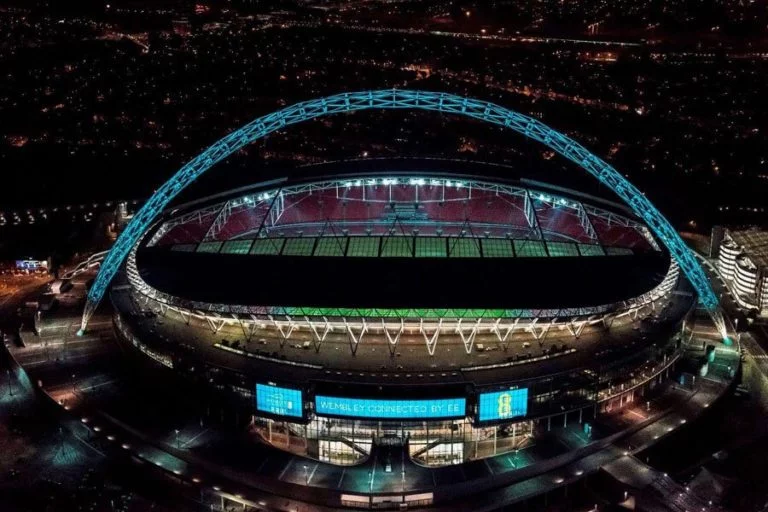
Multi-Storey Car Parks & Stadia
Commercial infrastructure is not immune. Vehicles continuously track in moisture and winter road salts, saturating the porous decks of multi-storey car parks. Even global mega-stadiums in cold climates battle severe chloride ingress, as hundreds of thousands of pedestrians track salt onto the concrete concourses every winter.
The Danger of the “Incipient Anode” Effect
When a general contractor sees spalling concrete, their instinct is to chip away the loose debris and fill the hole with a standard mortar patch. When dealing with chloride-induced corrosion, this is a disastrous mistake.
Standard patching traps the active chlorides and rusting steel inside the structure. Worse, the new, highly alkaline patch changes the electrical potential of the surrounding concrete. This creates a powerful electrochemical reaction known as the incipient anode effect, which rapidly accelerates the corrosion in the unpatched steel immediately adjacent to the repair.
Within months, the concrete next to the new patch will blow off, trapping the asset owner in an expensive, never-ending cycle of failing cosmetic repairs.
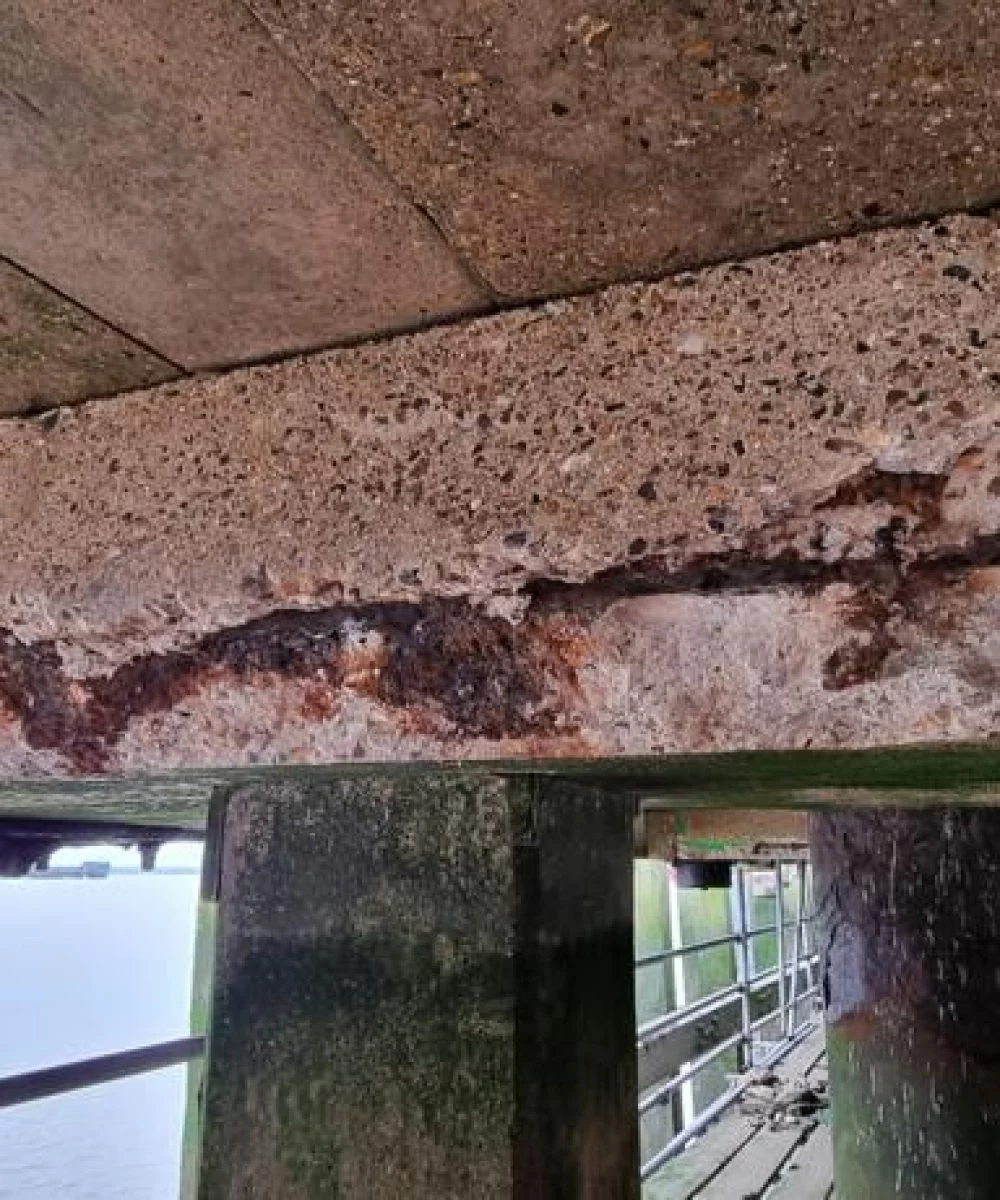
Cosmetic repairs to chloride-based corrosion will always fail quickly and can accelerate catastrophic corrision.
The Engineered Solution: Diagnostics and Cathodic Protection
Halting chloride-induced corrosion requires an engineering-led, multi-stage intervention.
- Locate the Invisible Threat You cannot fix what you cannot see. Before any breakout occurs, we deploy advanced Non-Destructive Testing (NDT). Our diagnostic teams use Half-Cell Potential Mapping to measure the electrical currents within the rebar, accurately identifying active “hotspots” of corrosion hidden deep behind perfectly intact concrete faces.
- Precision Breakout We systematically break out the diseased concrete, often utilising vibration-free robotic hydro-demolition to expose the full circumference of the rusting rebar without causing micro-cracking to the remaining healthy structure.
- Cathodic Protection (The Electrochemical Cure) To definitively halt the corrosion cycle, we must alter the chemistry. We integrate Galvanic Sacrificial Anodes or Impressed Current Cathodic Protection (ICCP) systems into the repair zone. This scientifically draws the corrosive forces away from the structural steel and into the sacrificial anode, providing decades of passive protection for the asset.
- BS EN 1504 Reinstatement Finally, the structural profile is seamlessly reinstated using high-performance, BS EN 1504 compliant micro-concretes, ensuring the load-bearing capacity is permanently restored.
Do Not Wait for the Concrete to Fall
Chloride-induced corrosion is a terminal disease for reinforced concrete, but it can be permanently arrested if caught and engineered correctly. Do not rely on cosmetic patches to secure your critical infrastructure.
Contact the specialist engineering team at Structural Repairs today to arrange a comprehensive NDT survey and secure the future of your assets.