Contact Us
If you have a commercial, industrial, infrastructure or heritage structural repair enquiry, contact us now. We will respond within one working day. Please note we do not provide services for domestic properties.

If you have a commercial, industrial, infrastructure or heritage structural repair enquiry, contact us now. We will respond within one working day. Please note we do not provide services for domestic properties.
Business enquiries:
The world is shrinking. Communication takes place worldwide, in moments. But it’s not just the internet; the speed with which we can move people and goods across the surface of the planet is increasing all the time.
At the heart of this are the world’s new mega bridges, which can take hours, if not days, of travel between distant shores. Allowing nations to expand trade and exert influence – not all of it welcome.
In some ways, these mega-bridges represent the ultimate test of structural engineering. Spanning active seismic zones, freezing oceans and immense physical distances, these structures represent the pinnacle of human ambition. They also represent staggering financial investments.
When a nation spends billions of pounds on a single transport link, waiting for visual signs of structural failure before acting is a critical mistake.
Here are ten of the most expensive bridges ever built – and a look at why preserving our existing infrastructure is the most valuable engineering challenge of the 21st century.
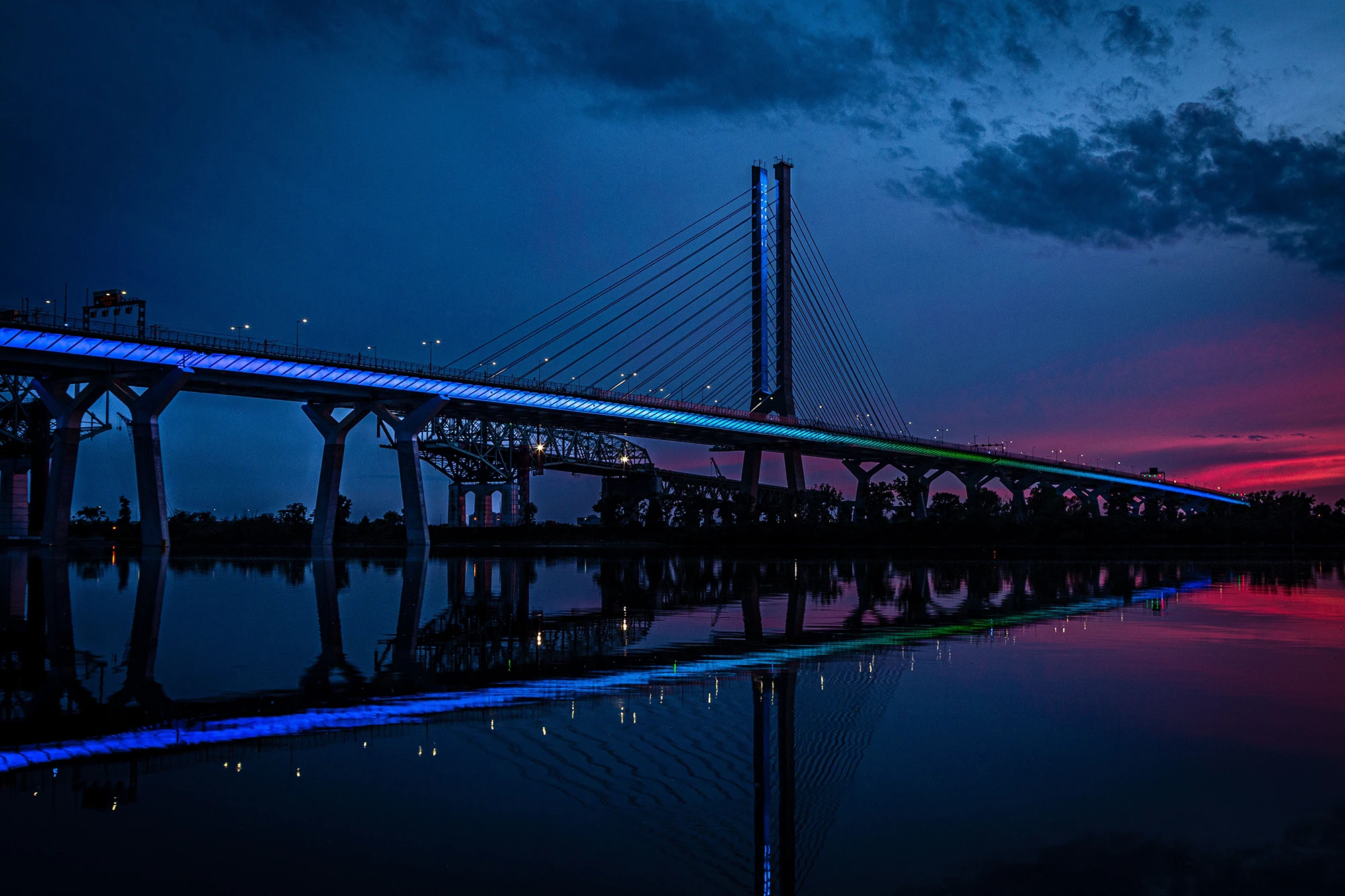
Falling just outside the top 10 most expensive bridges, the very beautiful Samuel De Champlain Bridge, Canada
These mega-structures command headlines because of their price tags, but they highlight a universal truth in civil engineering: building new infrastructure is astronomically expensive.
Whether you are managing a £15 billion sea crossing or a vital concrete overpass on the M42, the financial and carbon costs of demolition and replacement are vast. Concrete and steel endure immense daily stress from dynamic vibration, thermal expansion and water ingress. If left unchecked, this leads to rust jacking, delamination and eventual structural failure.
At Structural Repairs, we believe the most sustainable bridge is the one already standing.
We do not wait for concrete to fall. We use advanced non-destructive testing (NDT), Ground Penetrating Radar (GPR) and 3D laser scanning to look deep inside the structural matrix. By diagnosing hidden defects and executing precision structural repairs early, we restore load-bearing capacity and permanently extend the life of vital assets.
Do not wait for structural failure to force your hand. Protect your infrastructure before the damage becomes critical.
Images courtesy of WikiMedia Commons and Adobe Stock. Masthead image, the Hong Kong–Zhuhai–Macau Bridge at sunset.