Contact Us
If you have a commercial, industrial, infrastructure or heritage structural repair enquiry, contact us now. We will respond within one working day. Please note we do not provide services for domestic properties.

If you have a commercial, industrial, infrastructure or heritage structural repair enquiry, contact us now. We will respond within one working day. Please note we do not provide services for domestic properties.
Business enquiries:
Sweden occupies a distinctive position in the history of modern construction materials. It is the birthplace of autoclaved aerated concrete (AAC) and its reinforced variant, RAAC. Developed in the 1920s at Stockholm’s Royal Institute of Technology (KTH) and commercialised under brands such as Siporex and Ytong, the material became a defining element of the mid-century building boom. During the Miljonprogrammet (1965–1974), millions of square metres of precast reinforced aerated planks were installed across schools, civic halls, logistics depots and industrial facilities.
Fifty to sixty years later, asset owners and facility directors across the Nordic region face an unavoidable engineering milestone: these roof decks have exceeded their original nominal thirty-year design life. Yet, whilst the United Kingdom has experienced an acute crisis regarding RAAC in municipal portfolios, the Nordic context presents a starkly different structural narrative. Understanding that difference allows property owners to distinguish between panic-driven wholesale replacement and engineered in-situ life extension.
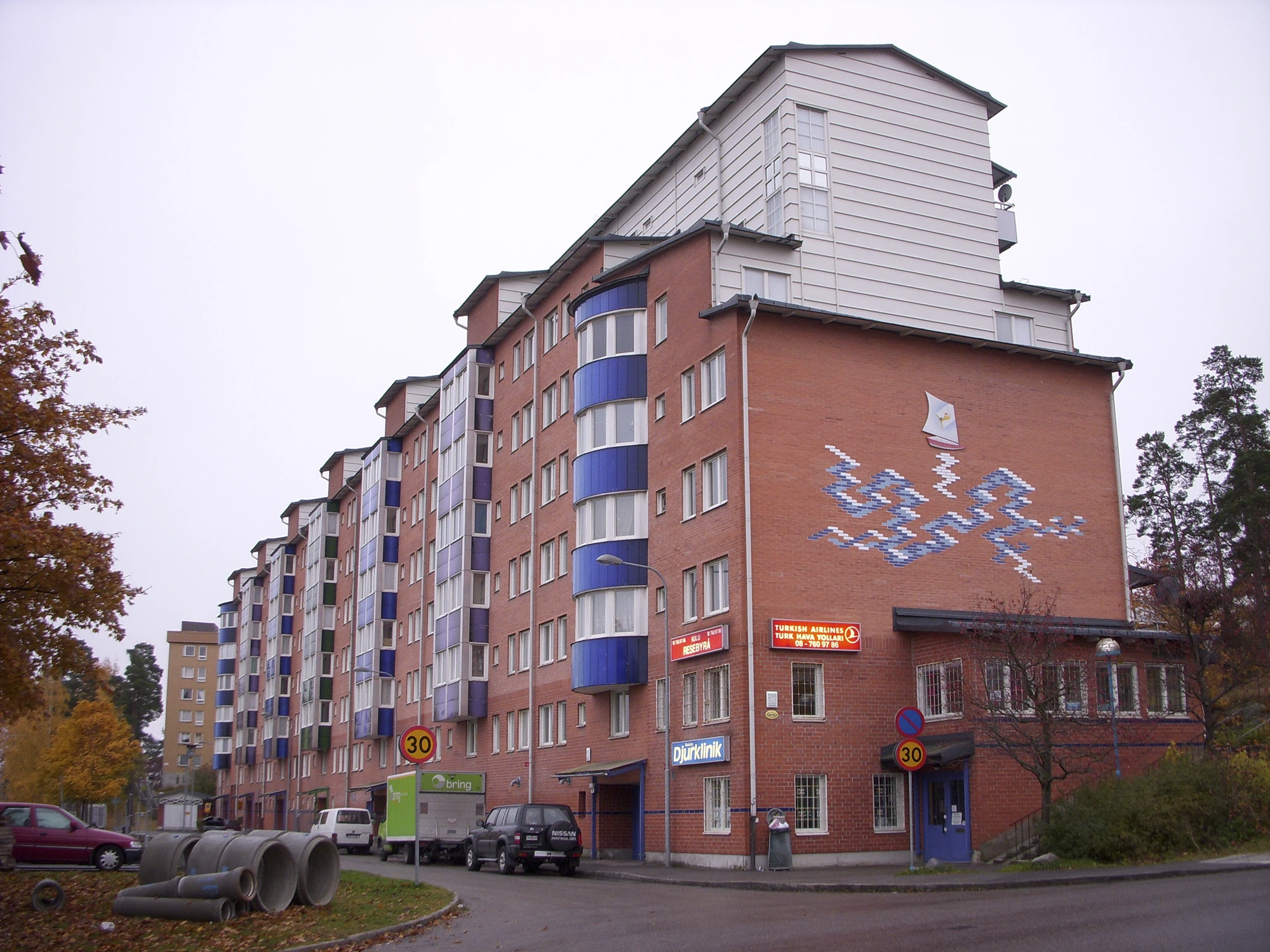
Refurbished Million Programme homes – part of Sweden‘s RAAC building revolution
The fundamental physics of reinforced aerated concrete do not alter across national borders. RAAC is an inherently porous, lightweight material with negligible resistance to water ingress and natural carbonation.
When moisture breaches the protective envelope, embedded steel reinforcement corrodes. In an unbonded aerated matrix, rebar corrosion leads rapidly to delamination, loss of anchor yield and catastrophic shear failure.
The divergence between the UK experience and the Scandinavian record lies in architectural detailing and maintenance regimes:
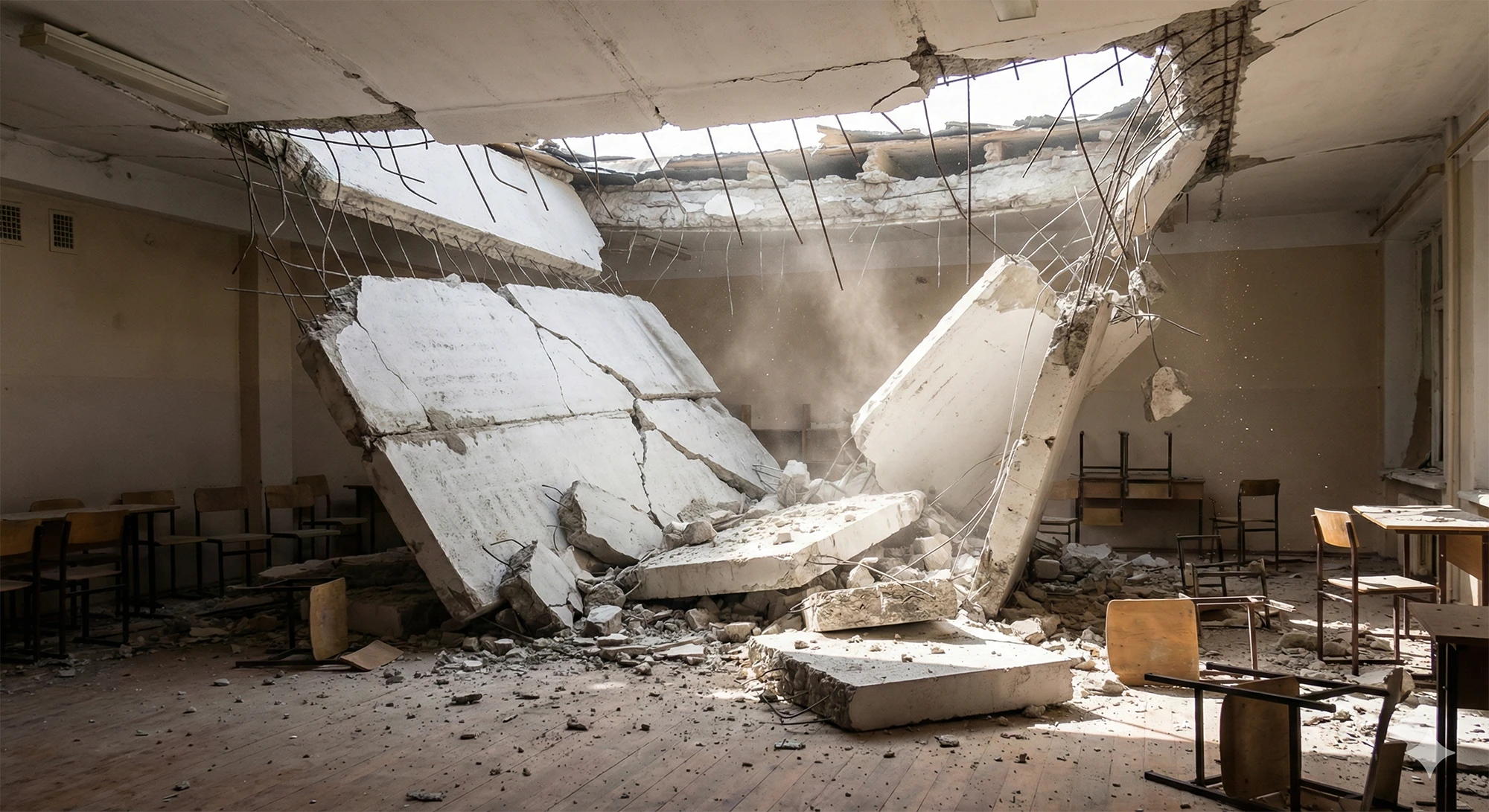
Sweden has suffered fewer catastrophic RAAC failure events than the UK
Wholesale roof replacement requires complete facility shutdowns, the removal of weatherproofing, massive capital expenditure and the creation of substantial embodied-carbon waste. In contrast, engineered composite strengthening reinforces the existing structural deck from the soffit, retaining sound fabric while upgrading load capacity to meet or exceed original design parameters.
Rather than relying on invasive mechanical steel additions, bonded composite reinforcements – such as our structural Reinforcer system – utilise ultra-high-tensile carbon fibre bonded directly to the tensile face of the aerated plank. The objective is not to artificially reverse historical plastic sag, but to arrest deflection, bridge tension cracks and provide substantial residual shear and flexural capacity.
Manufacturing facilities, retail stores and transport hubs cannot tolerate prolonged operational downtime. Working protocols adapt to live operations using mobile propping frames. On Network Rail infrastructure schemes, installation was completed while the assets remained operational. Similar live installations have been delivered across occupied NHS hospital wards and multiple Primark commercial stores across Europe.
Structural composite systems installed within commercial or industrial buildings must satisfy applicable European and Swedish fire protection regulations (Boverket’s building regulations, BBR). Where uninsulated carbon grids require additional fire resistance to achieve the required structural fire rating (such as R30 or R60), the design incorporates tested, compatible fire protection systems, including intumescent coatings or fire-rated mineral board encasements.
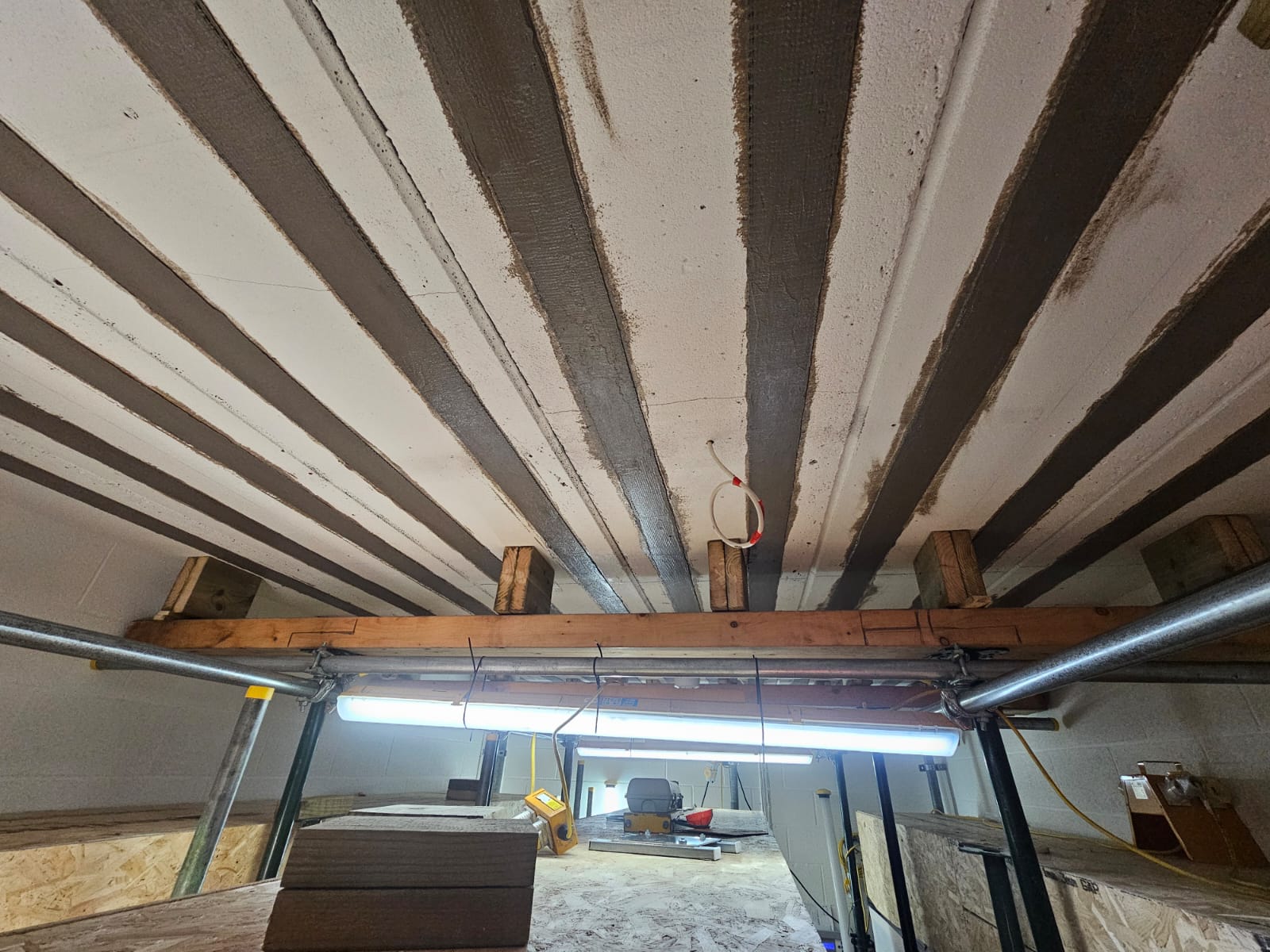
Recent RAAC remedial work completed for Network Rail in the UK
A structural intervention is only as good as the verifiable evidence supporting it. Baseline high-resolution LiDAR scans measure precise spatial profiles and plank sag. Repeat LiDAR scanning at 12 months on infrastructure installations has verified no measurable creep or deflection. Cyclical inspections continue at three-year intervals to maintain a fully auditable compliance log.
By addressing the material scientifically – measuring actual load capacity, verifying substrate bond and engineering the solution around the operational building – Swedish asset owners can extend the life of mid-century infrastructure safely, economically and sustainably.
Access to the underside of the RAAC planks is necessary for inspection, surface preparation and bonding. Mechanically fixed insulation beneath the planks must generally be removed within the active working area. Where sound, fully bonded finishes exist – such as direct plaster finishes evaluated on hospital projects – high-frequency scanning can verify adhesion and allow installation beneath the finish. Surface suitability is always established on site via direct pull-off testing prior to application. Approved mechanical fixings can subsequently reinstate insulation or acoustic boards once works are complete.
No. Bonded composite systems do not jack or reverse existing plastic deflection. The engineering objective is to stabilise the panel in its current position, arrest further creep and provide substantial residual shear and flexural capacity. Where excessive deflection indicates severe internal rebar slip or unmanageable shear distress, the panel requires individual structural appraisal.
Yes, provided the core concrete retains sufficient structural integrity. Non-destructive scanning identifies sub-surface voiding and delamination planes. Technicians mechanically break out unsound, friable aerated concrete back to competent parent material, treat exposed steel reinforcement, and rebuild the profile using a lightweight structural repair mortar engineered to match the low elastic modulus of autoclaved aerated concrete. The composite reinforcement is then installed across the reinstated profile.
Fire resistance is designed around the specific building classification and occupancy requirements. Where an uninsulated open-grid composite requires additional protection to achieve structural fire performance ratings (such as R30 or R60), the design incorporates fully tested, compatible secondary protection systems, including intumescent coatings or fire-rated mineral board encasements.
Yes. Installation sequences are planned around operating equipment, production machinery and logistics corridors. Using engineered, mobile temporary propping systems developed and proven in occupied environments – including Network Rail facilities, live NHS hospital estates and operational European retail stores – work proceeds in phased bays without necessitating facility shutdowns.
They are distinct contractual and engineering measures. Installations carry a ten-year workmanship warranty alongside a fifty-year product guarantee from the composite manufacturer, subject to project terms. The structural service life of the roof deck is an independent engineering assessment that accounts for overall building envelope maintenance, weatherproofing integrity, exposure conditions and cyclical inspection compliance.
Verification combines baseline physical records with long-term cyclical monitoring. High-resolution baseline LiDAR surveys record precise plank profiles upon completion. The open-grid design remains permanently visible from beneath, allowing straightforward visual inspection for signs of debonding. Follow-up LiDAR surveys are conducted after twelve months, and subsequently at three-year intervals, providing asset owners with verifiable geometric proof that deflection has ceased.
Roger Line is the founder and Chief Executive of Structural Repairs. With over three decades of forensic engineering and specialist contracting experience across the UK and mainland Europe, he leads structural life-extension initiatives for critical infrastructure, including Network Rail, healthcare trusts, water utilities and major commercial property portfolios. He is an advocate for evidenced non-destructive diagnostics, carbon reduction under PAS 2080 principles and targeted structural strengthening over unnecessary demolition.
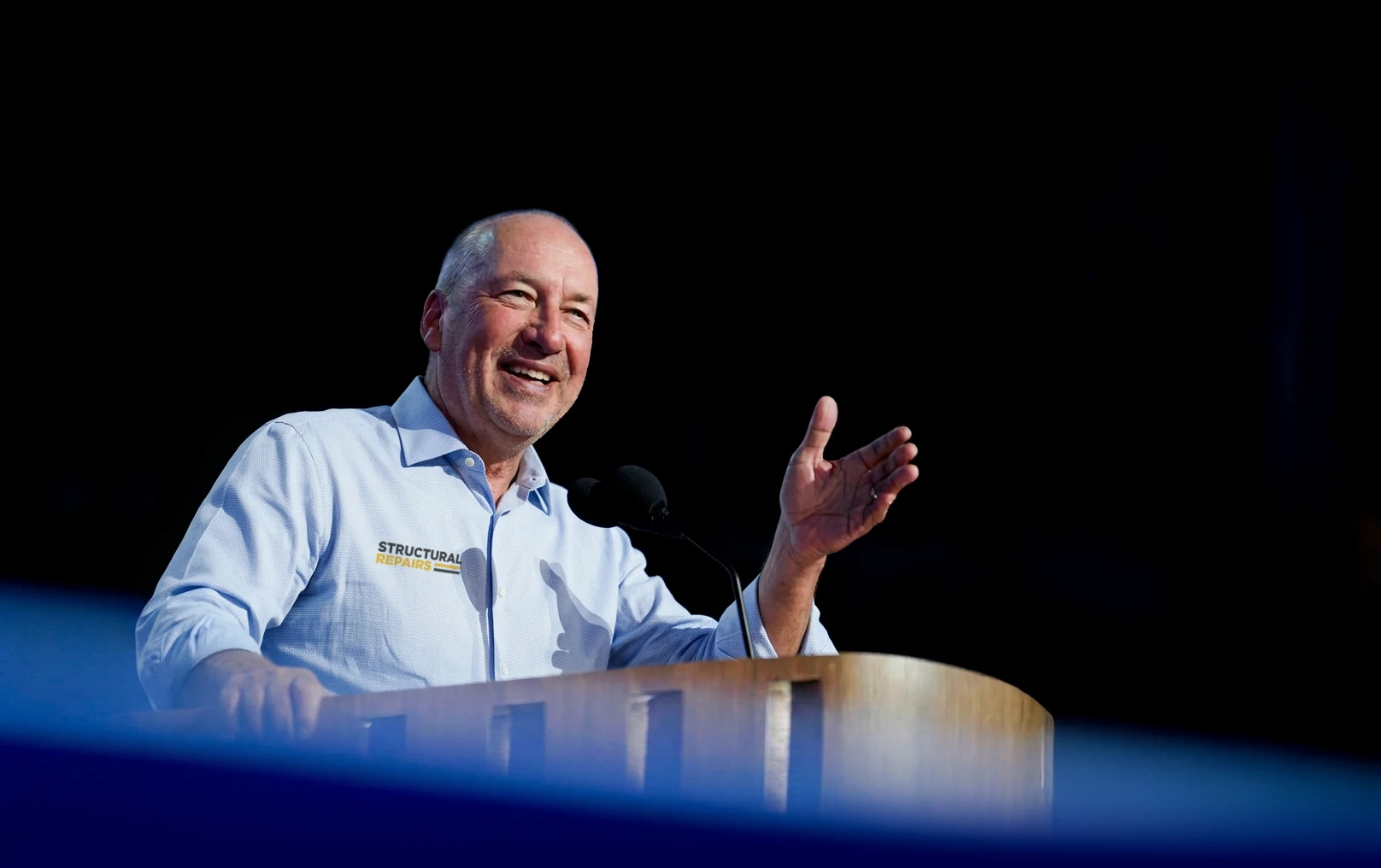
Roger Line is the founder and Chief Executive of Structural Repairs