Contact Us
If you have a commercial, industrial, infrastructure or heritage structural repair enquiry, contact us now. We will respond within one working day. Please note we do not provide services for domestic properties.

If you have a commercial, industrial, infrastructure or heritage structural repair enquiry, contact us now. We will respond within one working day. Please note we do not provide services for domestic properties.
Business enquiries:
Water-retaining concrete infrastructure across the UK operates under two fundamentally different regulatory and commercial regimes: Regulated Water and Commercial Water.
While both rely on reinforced concrete tanks, channels, bunds and containment structures subjected to relentless hydraulic, chemical and mechanical stress, the procurement frameworks, deterioration mechanisms and outage windows governing each sector diverge sharply. Understanding that distinction – and applying the right diagnostic and remediation methodology to each – is critical to extending asset service life without unnecessary capital replacement.
At Structural Repair Solutions (SRS), we deliver specialist scanning and low-intervention repairs that extend the life of water infrastructure across both sectors. Here is how the technical demands compare and how our condition-led approach addresses both.
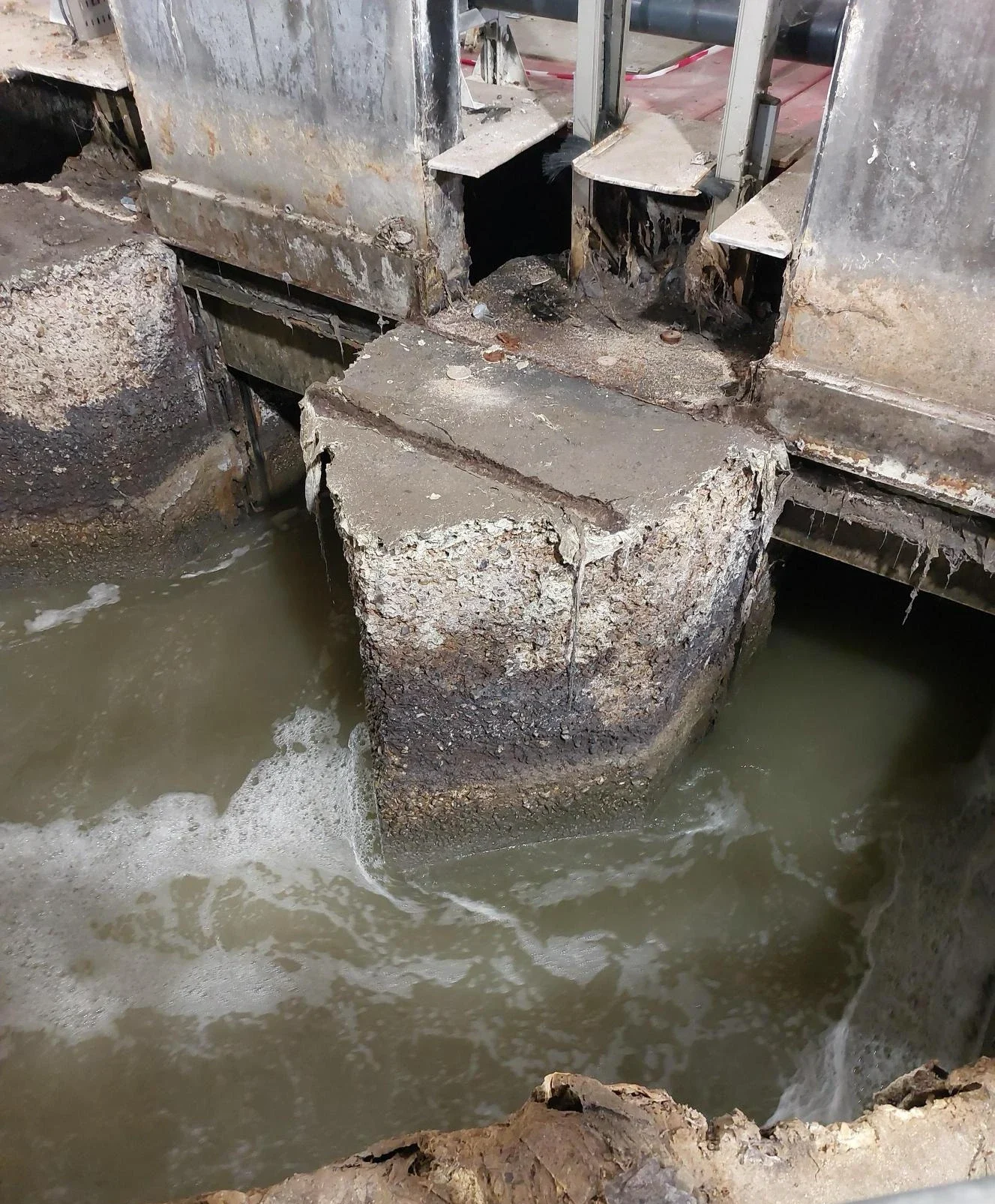
Hydrogen Sulphide Corrosion – one of the principal agents of decay in the regulated water sector
While the procurement routes and site constraints differ, the engineering principle remains identical: diagnose accurately first, intervene minimally, and protect the asset for the long term.
Breaking out sound concrete wastes time, inflates budgets and risks damaging embedded reinforcement or post-tensioning tendons. Through our specialist non-destructive testing division (structuralscanning.com), we deploy Ground Penetrating Radar (GPR) and Ultrasonic Pulse Echo (UPE) scanning to map rebar cover, slab thickness, delamination and subsurface voids before a single breaker touches the structure.
On live utility sites, taking an entire treatment stream offline is rarely an option. We engineer targeted structural repairs, crack injection and mechanical flow-control installations that keep critical infrastructure operational.
When an industrial effluent plant or cooling basin comes offline for a scheduled shutdown, every hour counts. We combine mechanical substrate preparation, structural concrete reinstatement and high-build, chemical-resistant epoxy or polyurethane lining systems to restore containment integrity within tight maintenance windows.
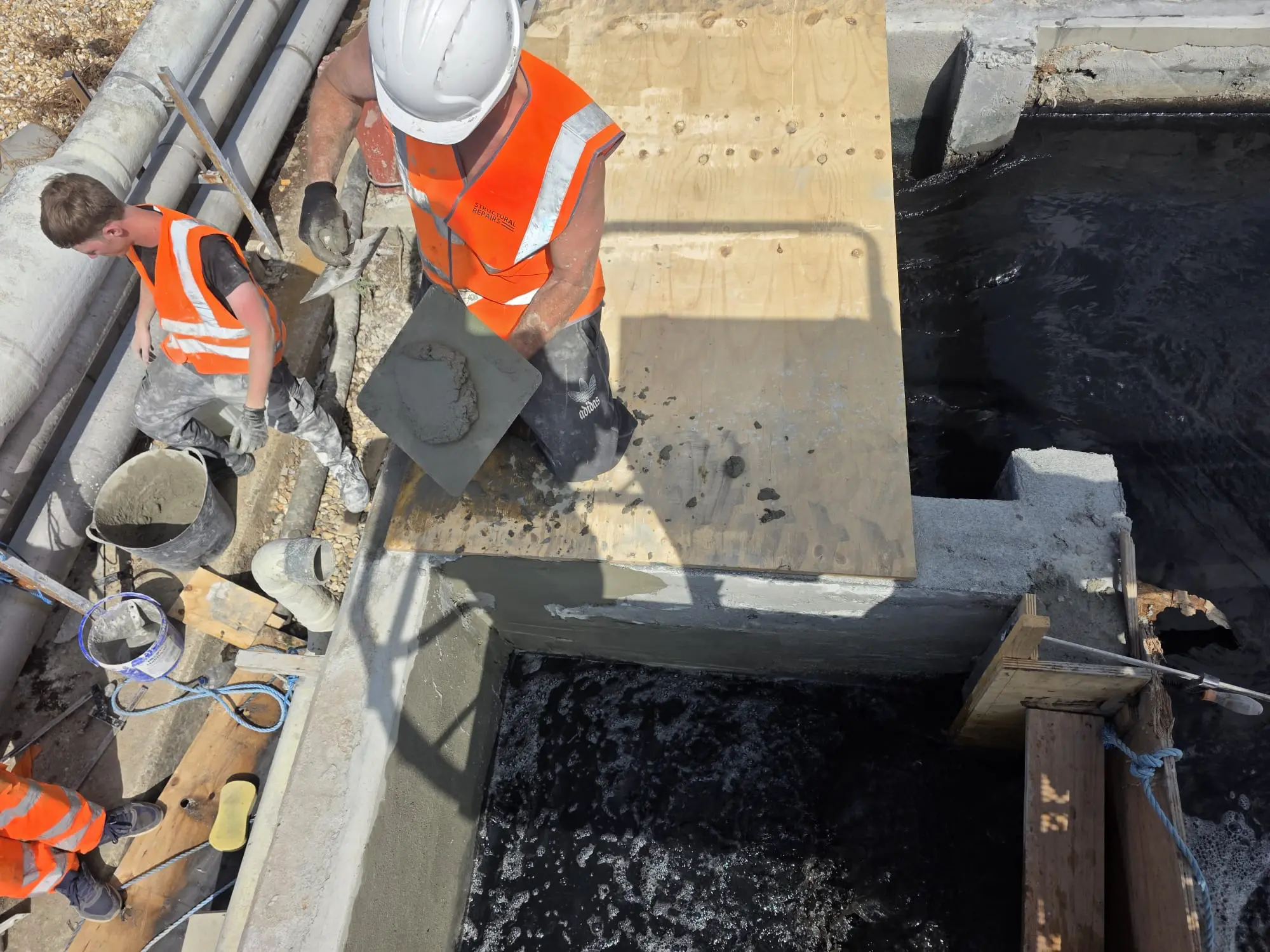
Regulated Water asset management – Ford Water Treatment Works 2026