Contact Us
If you have a commercial, industrial, infrastructure or heritage structural repair enquiry, contact us now. We will respond within one working day. Please note we do not provide services for domestic properties.

If you have a commercial, industrial, infrastructure or heritage structural repair enquiry, contact us now. We will respond within one working day. Please note we do not provide services for domestic properties.
Business enquiries:
When a catastrophic seismic event dominates the global news cycle, the immediate focus is rightfully on the human cost and the heroic efforts of search and rescue teams. As the dust settles following the devastating earthquakes in Venezuela, the structural engineering community must look at the data, understand the mechanics of the failure and reinforce the methodologies that keep our built environment safe.
The tragedy in Venezuela was exacerbated by an incredibly rare geological phenomenon known as an earthquake ‘doublet’.
Unlike a standard seismic event – where a primary shock is followed hours or days later by smaller aftershocks – a doublet involves two massive ruptures occurring almost simultaneously. In this instance, a magnitude 7.2 foreshock was followed just 39 seconds later by a magnitude 7.5 mainshock.
From an engineering perspective, this sequence is devastating to concrete infrastructure.
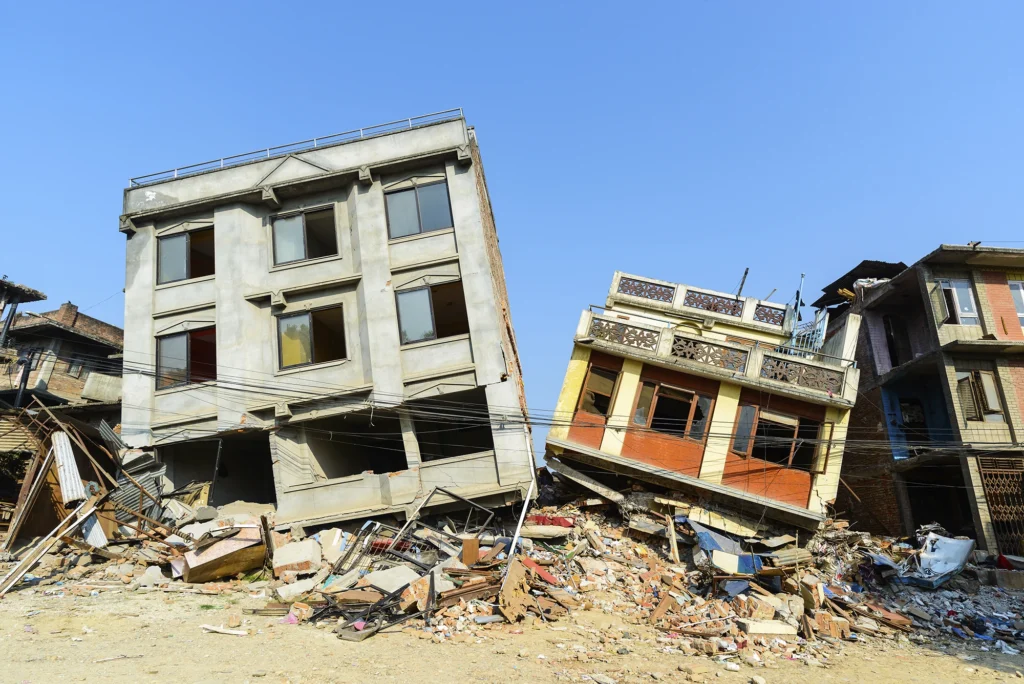
Lessons from the Anatolia earthquakes. Seismic disruption applies immense shear stress to the structural columns and the joints where the columns meet the floor slabs
The technologies used in modern structural repair and asset life extension are closely aligned with many of the approaches used in seismic retrofitting around the world.
Carbon Fibre Reinforced Polymer, or CFRP, can be used to wrap reinforced concrete columns and provide additional confinement. This can help improve the behaviour of the column under lateral loading by holding the concrete core together, supporting load transfer and reducing the risk of sudden loss of capacity.
At Structural Repairs, we continue to follow global best practice in this field, including developments from high-risk seismic regions where reinforced concrete retrofitting is a critical part of infrastructure resilience. Those lessons matter beyond earthquake zones. They reinforce a wider principle that applies to all structural repair: before any intervention is designed, the behaviour of the structure must be properly understood.
Strengthening is not about applying material to a damaged asset and assuming it is safe. It is about diagnosing the problem, understanding the load paths, identifying the failure mechanisms and designing an intervention that supports the structure’s future performance.
The events in Venezuela are a sobering reminder that structural resilience depends on more than routine maintenance. In high-risk environments, assessment, detailing, strengthening and long-term asset planning all play a role in protecting people and infrastructure.
Where repair and strengthening are appropriate, they must be evidence-led. In some cases, that may mean preserving and upgrading an existing structure. In others, it may mean accepting that repair is not the safest or most responsible route. The responsibility of structural remediation is to make that distinction clearly. The goal is not simply to extend the life of an asset. The goal is to ensure that the asset can continue to perform safely, reliably and appropriately for the risks it may face.

Picturesque but vulnerable, the hastily built cityscape of Caracas, Venezuela