Contact Us
If you have a commercial, industrial, infrastructure or heritage structural repair enquiry, contact us now. We will respond within one working day. Please note we do not provide services for domestic properties.

If you have a commercial, industrial, infrastructure or heritage structural repair enquiry, contact us now. We will respond within one working day. Please note we do not provide services for domestic properties.
Business enquiries:
Local highway authorities across England are preparing for capital allocations under the Department for Transport’s Structures Fund, designed to address the escalating backlog of weight-restricted bridges, flyovers and tunnels. With funded schemes required to be completed and reopened to traffic by March 2030, councils face pivotal capital expenditure choices. However, deciding whether an ageing bridge should be replaced or preserved through engineered strengthening must remain an objective structural engineering decision governed by empirical diagnosis rather than default replacement assumptions.
Weight limits indicate that a structure requires attention, but they do not automatically prove the entire asset has failed. Restrictions stem from three distinct structural realities: an older bridge’s original design capacity under historical codes, localised deterioration confined to a specific vulnerable element, or a precautionary measure applied while latent concerns are investigated. Effective allocation of funding requires distinguishing between these conditions before specifying major interventions.
Feature photo credit: Underbarrow Road Bridge over the A591 by David Dixon, CC BY-SA 2.0, via Wikimedia Commons
Visual surveys identify spalling, cracking and surface rust staining, but surface defects represent only the end stage of progressive sub-surface decay. Ageing reinforced concrete bridges are vulnerable to aggressive environmental and operational mechanisms:
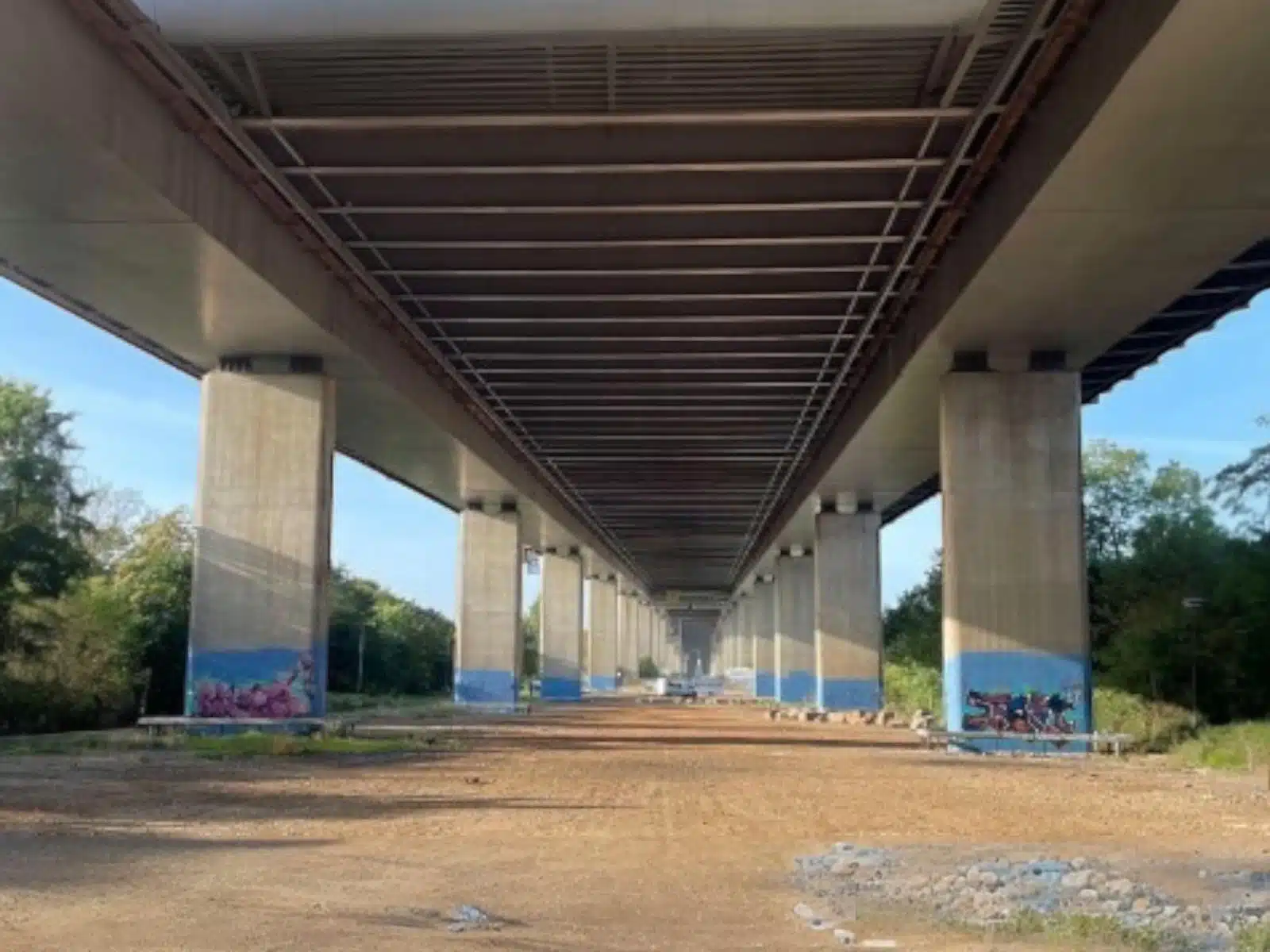
Delivering structural remediation on strategic motorway and local highway networks requires working within live operational envelopes. Repairs must integrate with short nocturnal possessions, lane closures, and cantilever access platforms. Pre-tested rapid-curing mortars, bonded composite systems, and clear contingency plans ensure works fit strict time windows without compromising technical acceptance.
While complete replacement is appropriate when an asset reaches terminal degradation, engineered life extension preserves vital community links, prevents years of detours, and dramatically cuts embodied carbon. Securing funding is only the first step; the enduring measure of success is ensuring public investment is guided by verifiable structural evidence from diagnostic appraisal through to final handover.