Contact Us
If you have a commercial, industrial, infrastructure or heritage structural repair enquiry, contact us now. We will respond within one working day. Please note we do not provide services for domestic properties.

If you have a commercial, industrial, infrastructure or heritage structural repair enquiry, contact us now. We will respond within one working day. Please note we do not provide services for domestic properties.
Business enquiries:
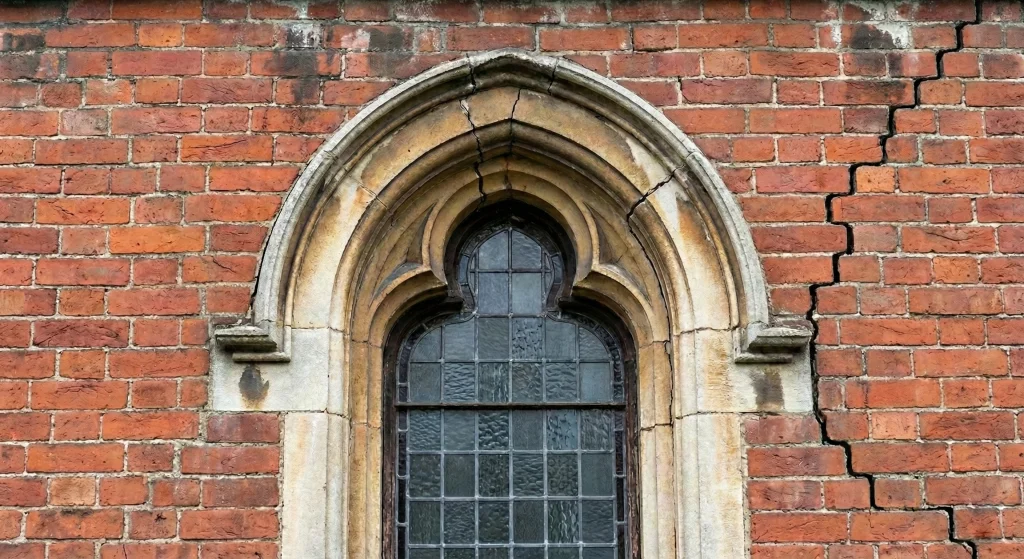
Structural degradation rarely starts in plain sight. Beneath concrete slabs, within multi-leaf masonry and inside deep structural cracking, fine voids and unbonded interfaces quietly erode load-bearing capacity.
Conventional pressure grouting pushes material from the surface inward – often compressing trapped air pockets, meeting resistance and failing to reach the narrowest micro-fissures. Vacuum-assisted resin injection turns that dynamic on its head. By evacuating moisture and air from the void matrix first, atmospheric and controlled mechanical differentials draw ultra-low-viscosity resins deep into the heart of the structure, ensuring 100% volumetric encapsulation without blowing out fragile substrates.
Before drilling begins, the substrate undergoes high-resolution Ground Penetrating Radar (GPR) and deflection analysis to map internal voids, establish reinforcement patterns and avoid embedded utilities. An engineered grid of injection and extraction ports is established across the defective zone.

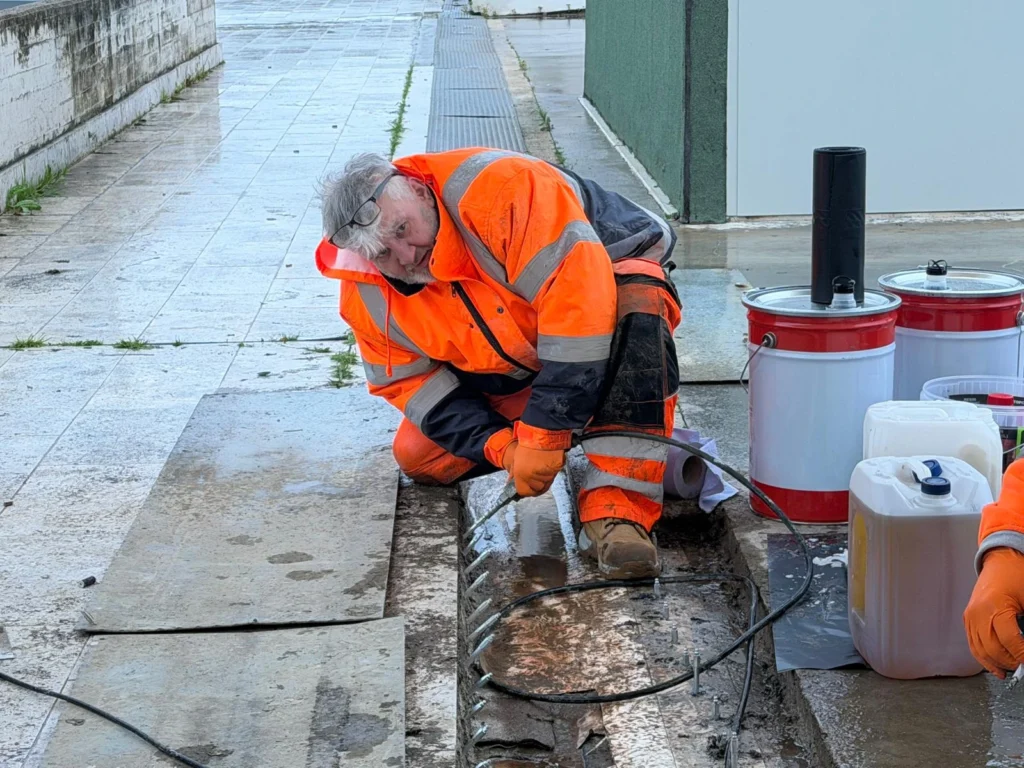
The target zone is sealed using high-integrity shrouds and vacuum hoods linked to multi-stage extraction units. Negative pressure is introduced, evacuating air, atmospheric humidity and lingering standing water from the void matrix into an integrated separation trap.
With resistance removed, specialist structural resins – fully compliant with BS EN 1504-5 standards for concrete injection and typically comprising low-viscosity thermosetting epoxies, structural polyurethanes or specialised polyureas – are introduced at opposing ports.
Operatives monitor the flow rate and draw down continuously, fine-tuning the vacuum pull across multiple ports to achieve uniform saturation. Once consolidated, injection hardware is cleanly removed and injection ports are made good to leave a flush, unblemished finish.
No. Traditional pressure grouting forces fluid into cavities using hydraulic pumps, which risks surface blowouts and compacts trapped air pockets. Vacuum-assisted injection inverts this mechanism entirely. By drawing down a negative pressure vacuum across sealed extraction ports, the resin is pulled into the void matrix naturally by atmospheric equilibrium. This eliminates back-pressure and ensures the material penetrates micro-cracks without stressing delicate substrates.
No. Expanding polyurethane (PU) foam is designed primarily for emergency water-stopping, where the chemical reacts with moisture to expand rapidly into an open cavity. For structural void consolidation and crack repair, expanding materials are counterproductive because they create internal air voids that compromise shear and compressive load capacity. Instead, vacuum injection uses non-expanding, ultra-low-viscosity structural resins (such as thermosetting epoxies or specialist methacrylates). These fluids draw down as thin as water, filling voids down to microns in width and curing into a dense, solid, non-shrink monolithic plastic.
Not on its own. When the vacuum unit engages at full draw, atmospheric pressure exerts a net downward force across the sealed membrane, drawing the slab down firmly against the sub-base rather than lifting it. Where slabs have dropped or stepped, remediation is handled as a coordinated two-stage process: the slab is mechanically or hydraulically lifted back to datum level first, and vacuum void grouting is then deployed beneath it to consolidate the void matrix and permanently underpin the newly restored elevation.
The treatment area is enclosed within a hermetically sealed shroud or valance linked to industrial vacuum extraction ducts. Once the vacuum engages, atmospheric air is evacuated from the void matrix, eliminating internal pneumatic resistance. Standing water is drawn along the negative pressure gradient into an integrated moisture-separator trap on the vacuum plant. When the resin feed ports are unsealed, the incoming fluid chases any remaining moisture toward the extraction points, achieving complete saturation.
No – the system is engineered specifically for shallow interface voids beneath bound layers, not deep ground consolidation. The process relies on an airtight seal across an intact pavement slab, bound sub-base or dressed masonry face. If the underlying ground is deeply shattered, loose or uncompacted, ambient air bleeds in through the soil, preventing the unit from drawing a vacuum. For settlement occurring several metres down in the subgrade, deep ground compaction or soil-injection methods are required. However, where a surface slab has fractured joints or hairline cracking, the sealed surface valance is invaluable: it temporarily seals those upper fissures to prevent air loss, keeping the negative draw focused entirely on consolidating the interface void beneath.
We do not guess what lies beneath. Every vacuum injection package is delivered under rigorous Quality, Environmental, Health and Safety (QEHS) management, with pre- and post-works verification via high-resolution GPR and pulse-velocity testing to confirm complete void elimination.
Speak to our engineering team to discuss feasibility or schedule a site investigation.