Reduce risk, avoid programme delays and make decisions based on evidence – not assumptions.

Severe Environments Require Engineered Interventions
Multi-Storey Car Park Rehabilitation
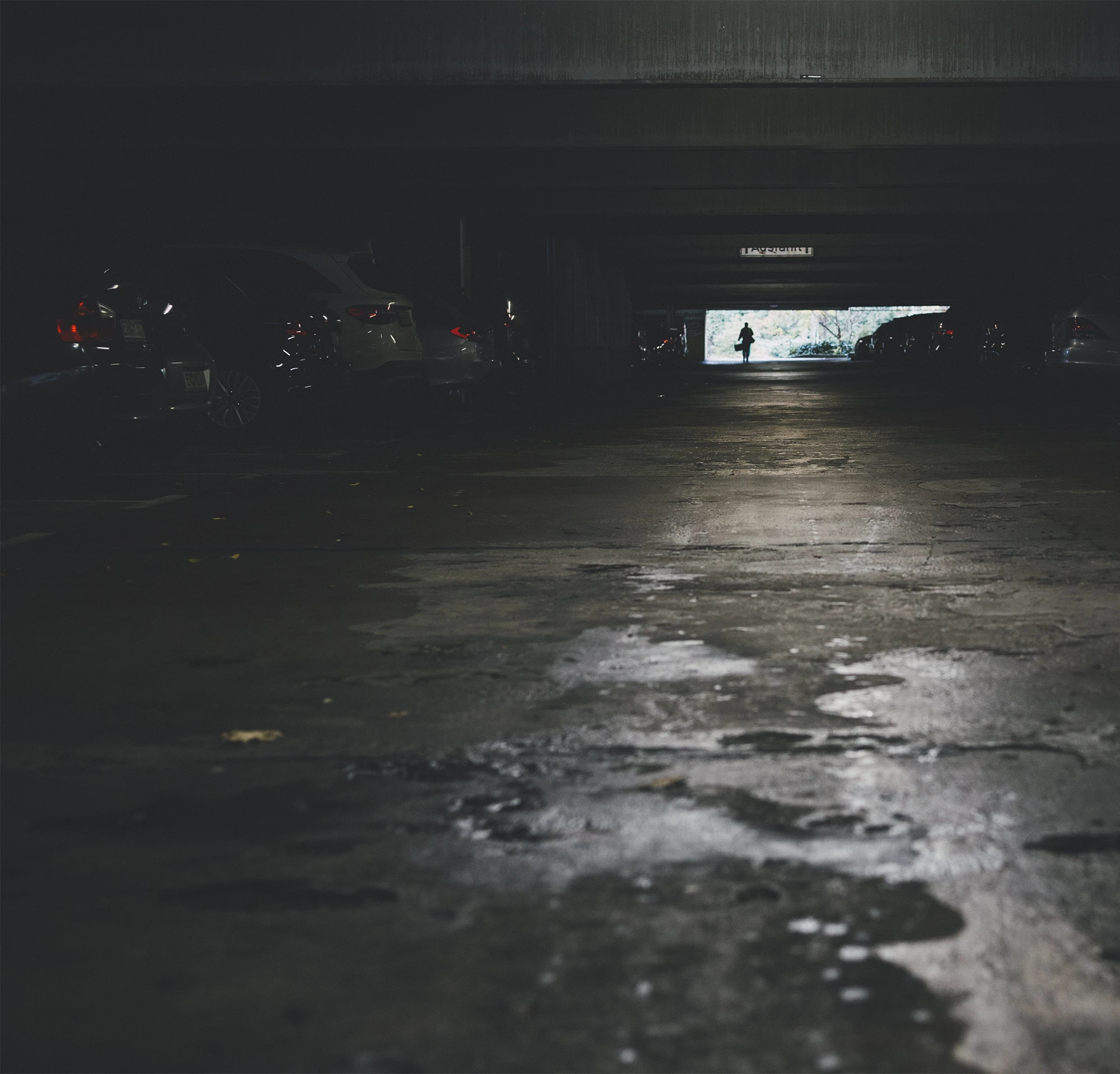
Multi-Storey Car Parks (MSCPs) are subjected to the most aggressive conditions of any commercial structure. They are highly loaded, continuously exposed to extreme weather, and constantly subjected to dynamic vibration. More critically, every vehicle that enters during the winter months drags in a highly corrosive payload: moisture laden with de-icing salts. If your car park is showing signs of spalling concrete, leaking decks, or failing joints, it is already in an advanced state of structural distress.
The Compounding Threat of Chloride Attack
The greatest threat to an MSCP is chloride-induced corrosion. As saltwater penetrates the porous concrete decks, it aggressively attacks the steel reinforcement (rebar) hidden inside. The steel begins to rust, expanding with immense force and physically blowing the concrete apart.
Relying on reactive, cosmetic maintenance in this environment is a critical error. Simply patching a spalled column or applying a cheap coat of paint over a porous deck does nothing to stop the active chemical attack occurring within the concrete matrix. In fact, due to the “incipient anode effect,” patching often accelerates the corrosion in the immediately adjacent areas. As the structure degrades, asset managers are forced into a cycle of constant, ineffective repairs, leading to closed decks, lost parking revenue, and severe life-safety liabilities from falling concrete.
Total Asset Reinstatement & Protection
Structural Repairs approaches MSCP rehabilitation not as a patching exercise, but as a complete structural engineering overhaul. We do not guess; we start with forensic diagnostic testing – including Half-Cell Potential surveys and chloride depth profiling – to map the exact extent of the invisible corrosion.
Armed with empirical data, our engineers design and execute a comprehensive, long-term reinstatement strategy that addresses both the symptom and the root cause.
- Cathodic Protection (CP): To permanently halt chloride-induced corrosion without breaking out massive volumes of structurally sound but contaminated concrete, we design and install Galvanic or Impressed Current Cathodic Protection (ICCP) systems. This uses a small electrical current to scientifically stop the steel from rusting.
- Hydro-Demolition & Structural Repair: Where concrete has failed, we utilise vibration-free robotic hydro-demolition to rapidly remove the diseased matrix without damaging the underlying rebar. We then reinstate the profile using high-performance, shrinkage-compensated structural micro-concretes.
- Deck Waterproofing & Movement Joints: A concrete repair is only as good as the waterproofing that protects it. We install heavy-duty, elastomeric deck coating systems and re-engineer failing movement joints. These advanced polymer systems bridge dynamic cracks, provide high slip resistance, and create an impermeable barrier against future chloride and moisture ingress.
- Phased Live-Environment Execution: We understand that an MSCP is a revenue-generating asset. We engineer our repair programs in strict phases, using rapid-curing materials and localised traffic management to keep the maximum number of parking bays open and operational throughout the project.
MSCP Rehabilitation Technical FAQ
When commercial property managers and building owners approach us regarding degrading multi-storey car parks and podium decks, they need empirical data and guaranteed service life extension. Here is how our engineering-led approach addresses the most common parking structure repairs.
Concrete spalling in multi-storey car parks is primarily caused by chloride-induced corrosion and carbonation. Vehicles continuously track in moisture and de-icing salts (chlorides) from winter roads. These chlorides penetrate the porous concrete deck and attack the reinforcing steel. Simultaneously, carbon dioxide from vehicle exhausts lowers the natural alkalinity of the concrete. Once the rebar rusts, it expands up to seven times its original volume. This massive internal pressure blows the concrete face off, resulting in spalling and compromised structural integrity.
Repairing a concrete car park requires strict adherence to BS EN 1504 standards. Structural Repairs does not just patch the surface; we address the electrochemical root cause.
Reinstatement & Waterproofing: The profile is reinstated using high-performance repair mortars, followed by the application of elastomeric, trafficable waterproofing deck membranes to prevent future chloride ingress.
Condition Assessment: We deploy Ground Penetrating Radar (GPR) and half-cell potential testing to map the exact extent of unseen subsurface corrosion.
Concrete Removal: We use hydrodemolition or mechanical breakout to remove delaminated and chloride-contaminated concrete back to a sound substrate.
Rebar Treatment: Exposed steel is cleaned, treated, or spliced. We also deploy galvanic cathodic protection to halt adjacent corrosion.
When engineered to meet or exceed the requirements of Concrete Society Technical Report 69 (TR 69), a parking structure concrete repair will last for decades. By combining BS EN 1504 compliant mortars with advanced cathodic protection and robust deck waterproofing, we achieve maximum service life extension. Because we manage the entire lifecycle in-house – from initial NDT assessment to physical execution—we back our commercial car park rehabilitation projects with comprehensive Structural Repairs Guarantees.
This is known as concrete spalling. It is almost always caused by water and de-icing salts leaking through the deck above, reaching the steel reinforcement in the soffit (ceiling), and causing it to rust and expand. The expansion forces the concrete cover to break away and fall.
Cathodic Protection (CP) is an electrochemical technology used to control the corrosion of steel in concrete. Instead of physically cutting out all concrete contaminated by road salts – which is incredibly expensive and structurally disruptive – CP introduces a small, continuous electrical current into the rebar. This current shifts the electrical potential of the steel, effectively turning off the rusting process
Standard paints or thin-film epoxies lack the flexibility to cope with the immense dynamic movement and thermal expansion inherent in a multi-storey car park. They become brittle and crack, allowing water to pass through. We specify fully elastomeric, multi-layer polyurethane systems that stretch and bridge active cracks without tearing.
Rarely. We engineer our rehabilitation programs to minimise operational downtime. By phasing the works deck-by-deck or zone-by-zone, we maintain safe traffic flow and ensure your asset continues to generate revenue while we restore its structural integrity.